
Photo by Llio Angharad on Unsplash
Executive Summary
In May, we received 130 responses to at least one question about Intangible Cultural Heritage, or the monthly Pulse Monitor questions, which track the individual and organisational resilience of respondents.
Key findings from the research exploring Intangible Cultural Heritage (ICH) and living heritage show:
- Intangible Cultural Heritage is human and relational, rather than tied to a physical place. 85% agree a place loses meaning when its people disappear, and 79% agree something irreplaceable is lost when activities tied to a place end.
- Words and stories are ICH’s primary form, with 35% saying it is related to oral traditions and expressions.
- The panel are more likely to have completed self-guided, professional development specifically related to Intangible Cultural Heritage or living heritage, rather than training.
- Dedicated funding or financial support would help the panel engage with Intangible Cultural Heritage.
- Almost 40% were aware of the Heritage Crafts Red List, and some awareness of the other examples. 38% had no awareness of the available inventories/risk lists.
- Almost four-in-ten said Intangible Cultural Heritage was either ‘central to our organisation’s purpose’, or that they have formal strategy. Only 6% ‘don’t knowingly engage’ with it.
- Four-in-five respondents are very or fairly confident they can explain the meaning of Intangible Cultural Heritage. Of those that feel less confident in explaining this concept, 67% are able to define and describe Customs and Traditions.
Pulse Monitor
Taking the pulse of the people who care for our shared heritage:
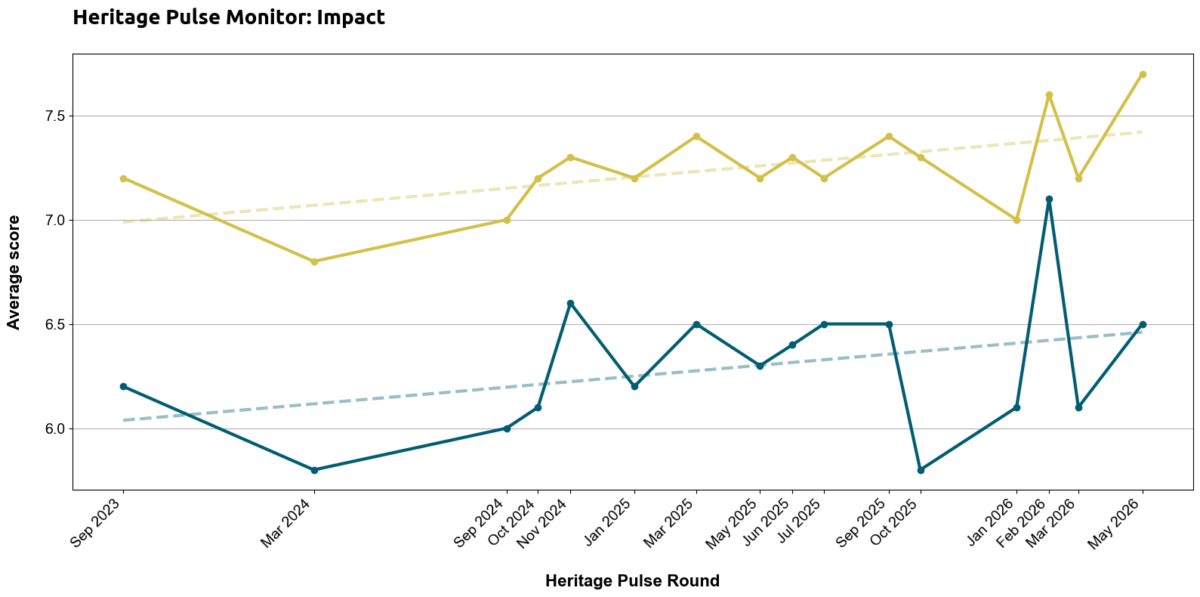
- We observed similar trends to earlier this year, with small increases in the panel’s ability to care for their heritage, community value, and desire to stay at their organisation for 12 months or more.
Survey Report (Intangible Cultural Heritage)
Respondents believe that Intangible Cultural Heritage is human and relational, and separate to the idea of place
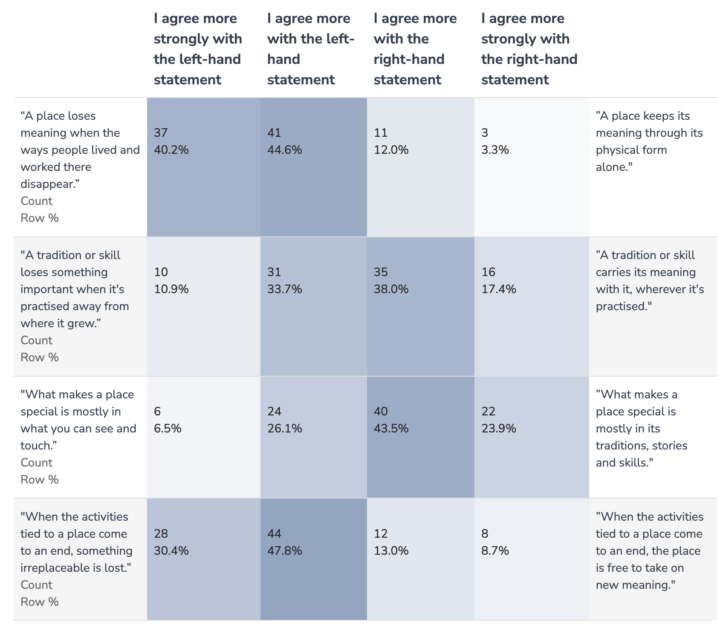
The following statements explore how you think about places, traditions and the activities that give them meaning. For each pair, please indicate where your view sits on the scale between them. There are no right or wrong answers, we are interested in your instinctive response.
n=92
The places and activities associated with Intangible Cultural Heritage are rooted in communities, rather than physical forms, according to the panel. 85% agreed to some degree that a place loses meaning when its people disappear, and 79% felt that when activities tied to a place end, something irreplaceable is lost.
Opinion was more divided around traditions and skills. A majority (55%) felt that a tradition carries its meaning wherever it is practiced, and 67% believe that what makes a place special is not necessarily its tangible fabric. The results point to a nuanced understanding of Intangible Cultural Heritage, prizing community and continuity while not entirely discounting the resilience of living traditions.
Words and stories are the primary form of Intangible Cultural Heritage
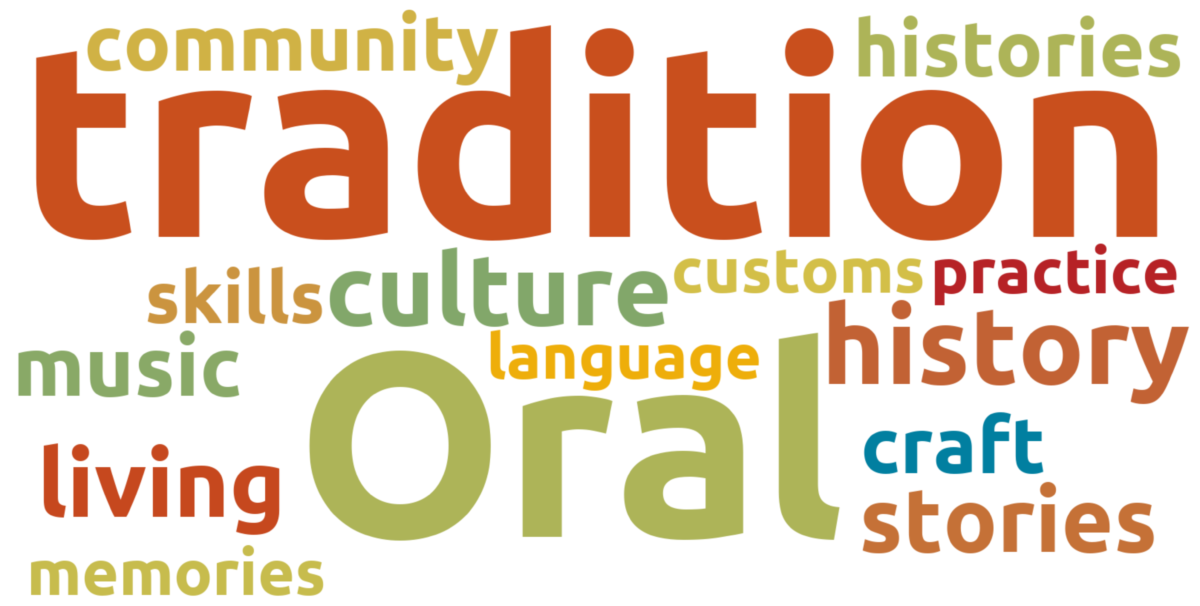
What is the first example that comes to mind when you think about Intangible Cultural Heritage or living heritage?
n=90
We used a Large Language Model (LLM) to categorise those responses against the domains contained within the Convention for the Safeguarding of the Intangible Cultural Heritage:
- The “Intangible Cultural Heritage”, as defined in paragraph 1 above, is manifested inter alia in the following domains:(a) oral traditions and expressions, including language as a vehicle of the Intangible Cultural Heritage;(b) performing arts;(c) social practices, rituals and festive events;(d) knowledge and practices concerning nature and the universe;(e) traditional craftsmanship.
| Domain | % |
| (a) Oral traditions & expressions, incl. language | 35% |
| (b) Performing arts | 11% |
| (c) Social practices, rituals & festive events | 26% |
| (d) Knowledge & practices concerning nature & the universe | 4% |
| (e) Traditional craftsmanship | 16% |
| Blank (unclassifiable) | 8% |
A plurality of responses mention oral history, communication and language:
“Oral histories yet to be recorded, non-physical items such as historical music handed down without formal notation are intangible to me. Living heritage is quite often what many do without labelling it so.”
“In my case the activity and sound of church bell ringing. The physical bells are tangible and date back 100 or more years but the way in which the bells are rung, the skills involved that are taught and practised people of almost all ages, and the archetypal sound of church bells in an English setting are a living example of our cherished heritage.”
“Songs that I hear on the Gaelic radio station as I always listened to them when I was growing up.”
Most panellists have not completed training specifically related to Intangible Cultural Heritage
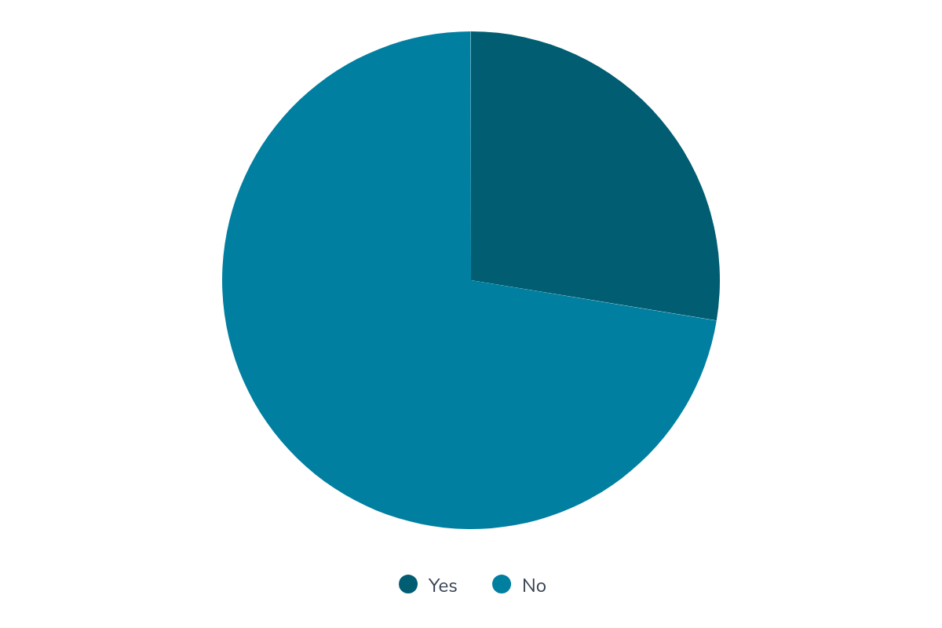
Have you ever received any training, guidance, or professional development specifically related to Intangible Cultural Heritage or living heritage?
n=98
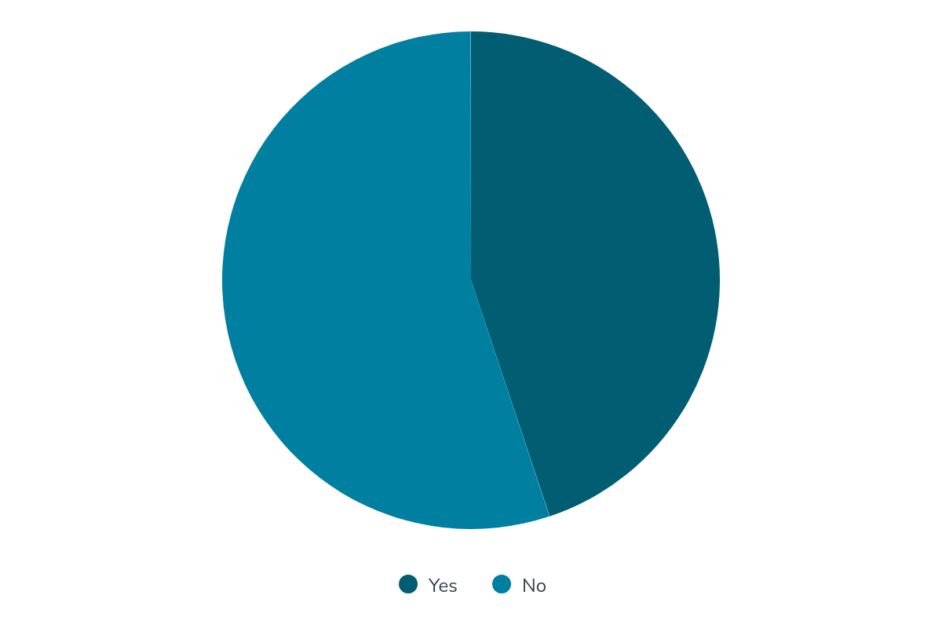
Have you ever undertaken your own, self-guided, professional development specifically related to Intangible Cultural Heritage or living heritage?
n=98
Panel members are more likely to have completed self-directed professional development (45%), rather than formal training on the subject (28%).
Those that had completed any form of training were then prompted for the source of their professional development. Formal training providers included globally recognised bodies such as the BBC and UNESCO, academic study, and specialist organisations including the Oral History Society. Those completing self-guided training skewed more towards interest-led and community-based sources, including reading academic sources, local engagement and practice-based learning.
Dedicated funding or financial support would help the panel engage with Intangible Cultural Heritage
Thinking about your organisation’s work, which of the following would most help you engage with Intangible Cultural Heritage?
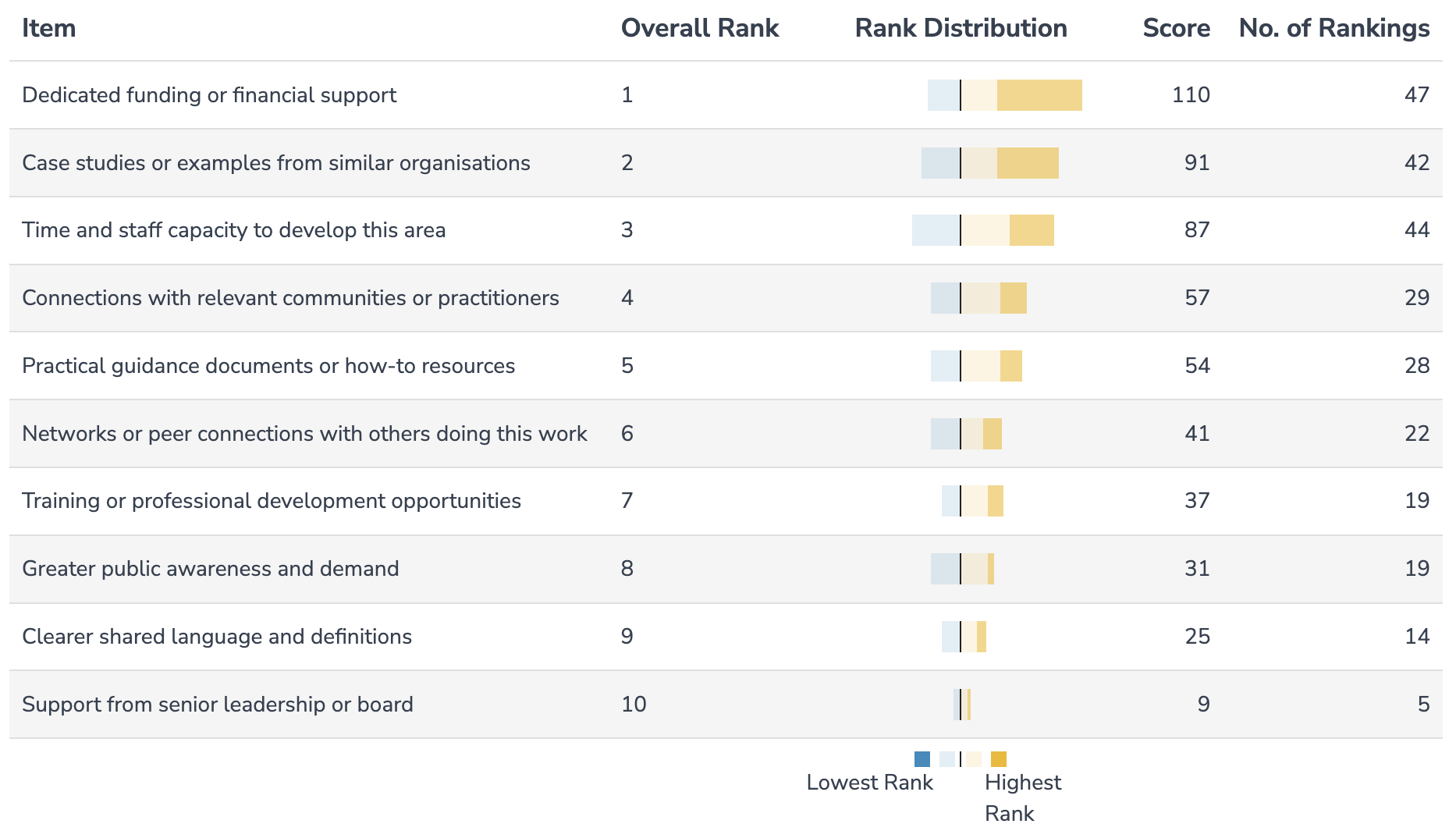
Increasing engagement with Intangible Cultural Heritage depends upon increasing capacity, through funding or staff availability, or increasing knowledge, through case studies or other methods of sharing best practice.
Voluntary organisations, and those with a turnover less than £1 million rank case studies or examples ahead of measures to increase capacity in their organisations.
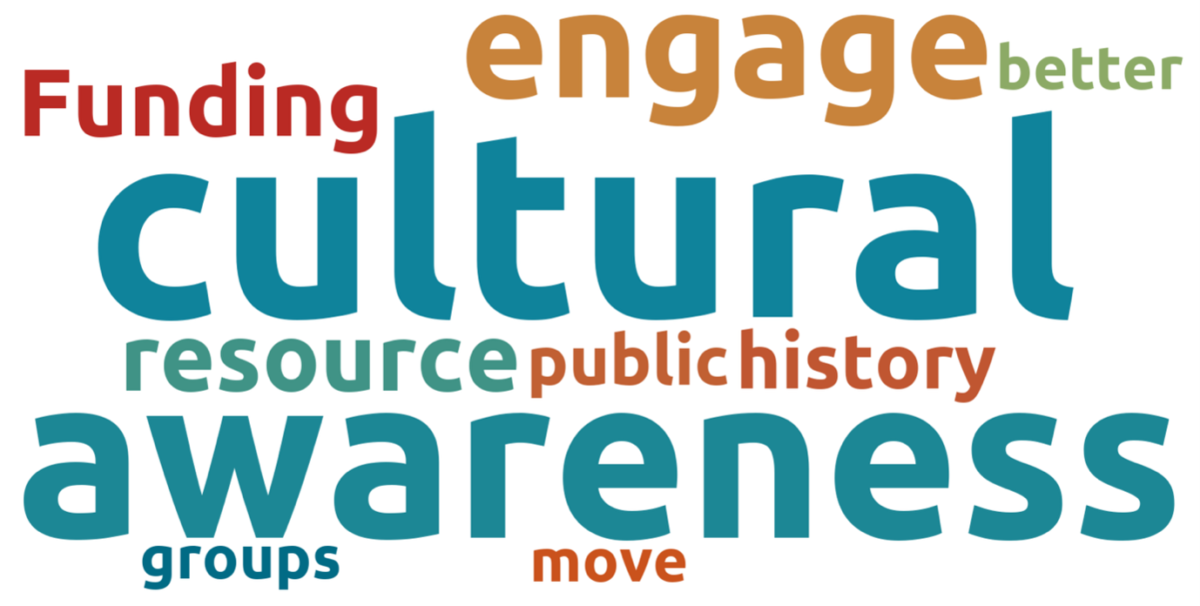
We asked a further qualitative question asking if there any other ways that would help respondents engage with Intangible Cultural Heritage:
n=44
Three key themes emerged in response:
- Coherent and sustained financial support
- Awareness and understanding of Intangible Cultural Heritage among the sector and users of heritage
- Practical tools and channels to capture, preserve and disseminate Intangible Cultural Heritage.
Stronger awareness of UK heritage tracking inventories than international schemes
n=95
The Heritage Crafts Red List of Endangered Crafts is the most recognised resource, with 39% of respondents aware of it. However, nearly four-in-ten had no awareness of any of the lists presented.
There is emerging data of less awareness within smaller and less complex organisations. Voluntary organisations and those with turnover less than £1 million are more likely to select none of the above than any named lists.
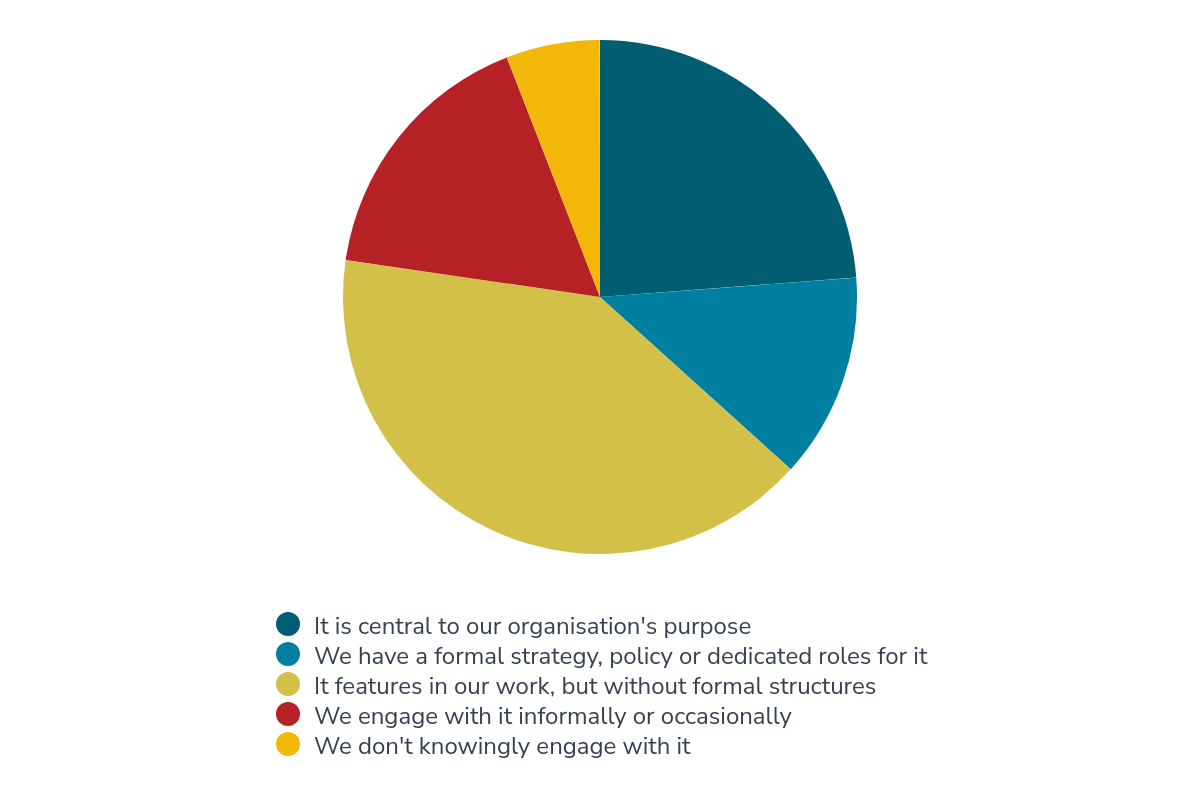
37% of respondents say Intangible Cultural Heritage central to their organisation’s work
Which best describes how your organisation engages with Intangible Cultural Heritage?
n=101
Only 6% of respondents do not knowingly engage with Intangible Cultural Heritage.
More than 80% of respondents confident in their ability to explain Intangible Cultural Heritage
If a member of the public asked you to explain the meaning of the phrase ‘Intangible Cultural Heritage’, how confident would you be in giving a clear answer?
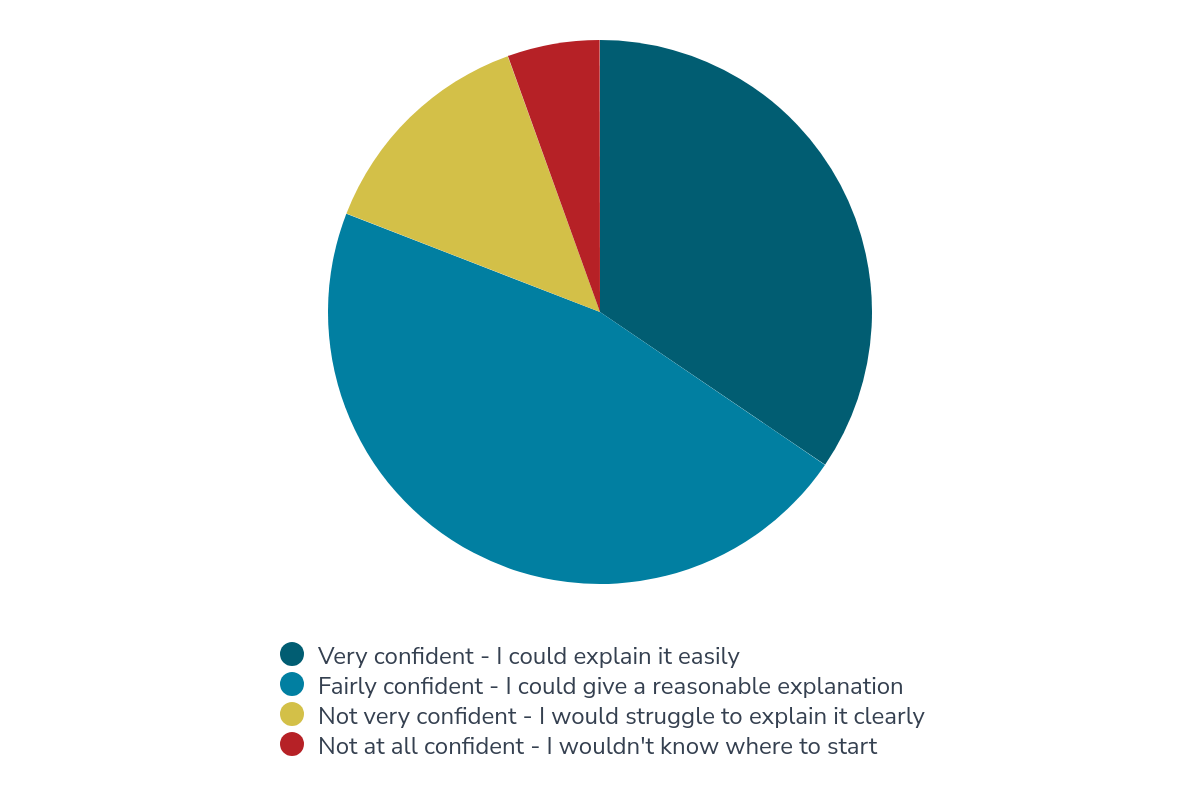
n=110
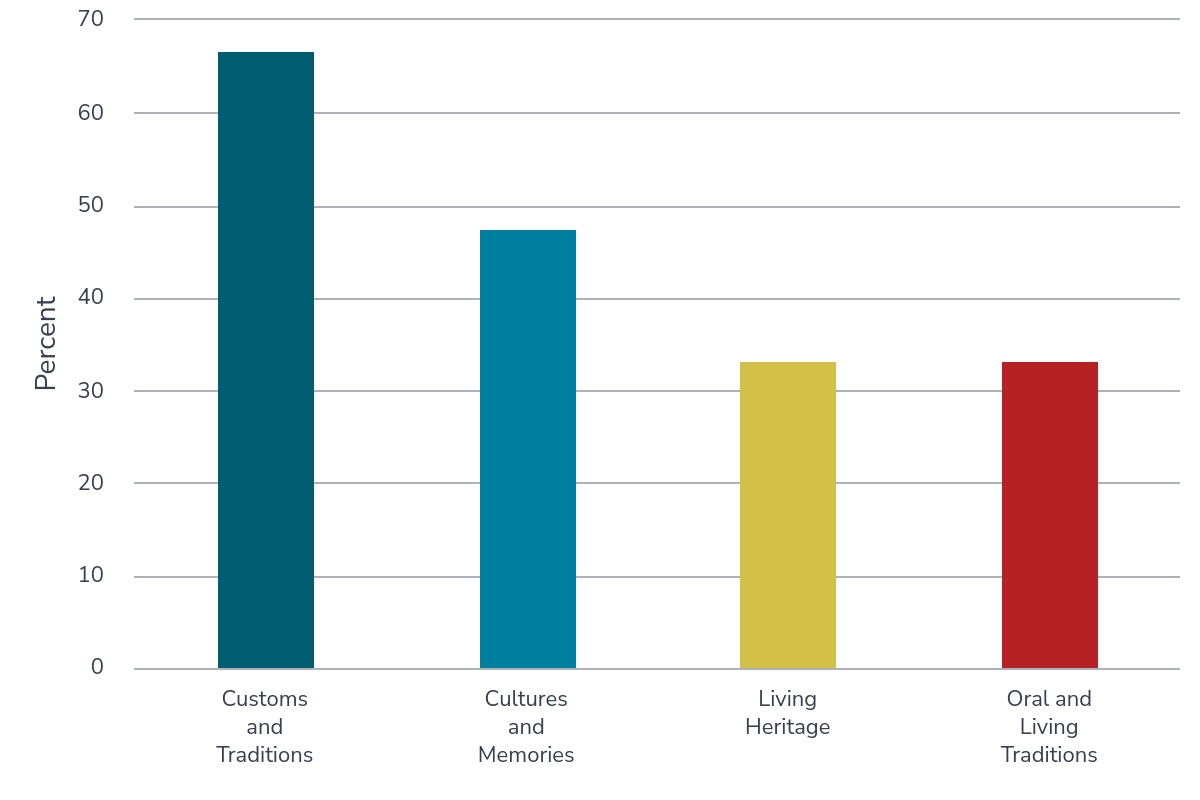
Those that were neither very nor fairly confident in explaining Intangible Cultural Heritage were asked if they were more confident in defining related terms:
Which of these alternative descriptions, if any, would you feel more confident in instinctively being able to both define and describe?
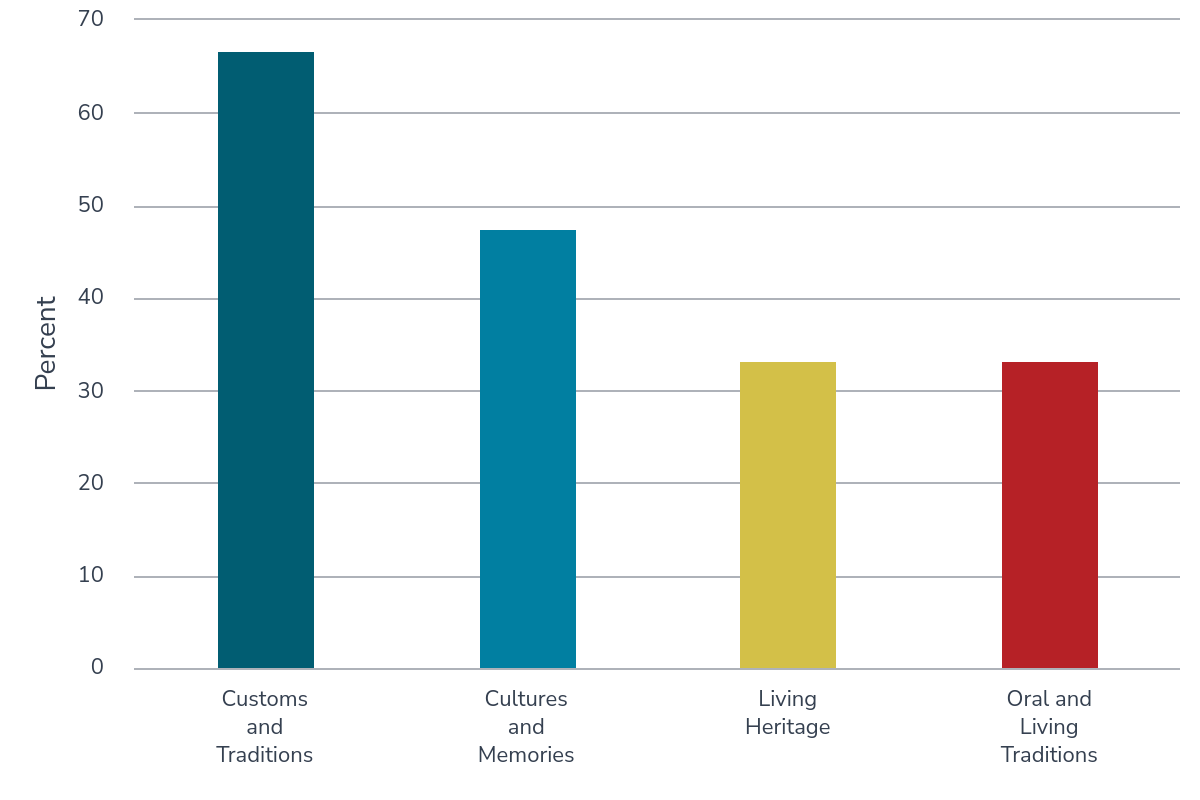
Pulse Monitor
Pulse Monitor is a monthly health check on the heritage sector, measuring its resilience, confidence and ambition.
Work of panel increasingly valued by their communities
n=92
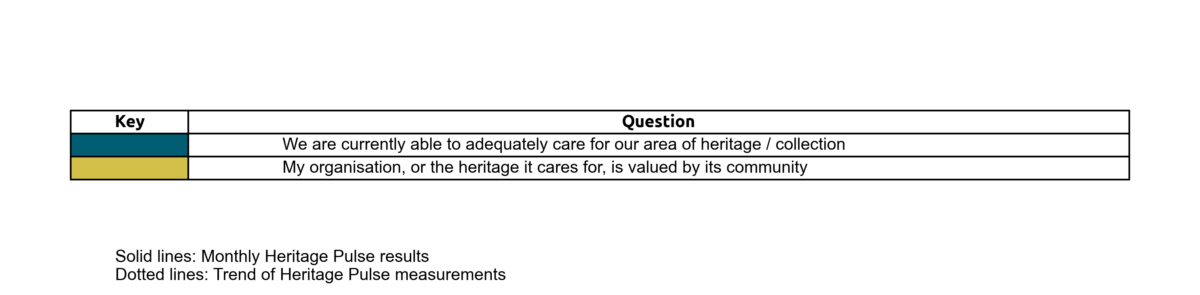
Both impact measures increased this month, with “My organisation, or the heritage it cares for, is valued by its community” recording its highest score in Heritage Pulse.
Reported stress levels and intention to remain diverge away from trend
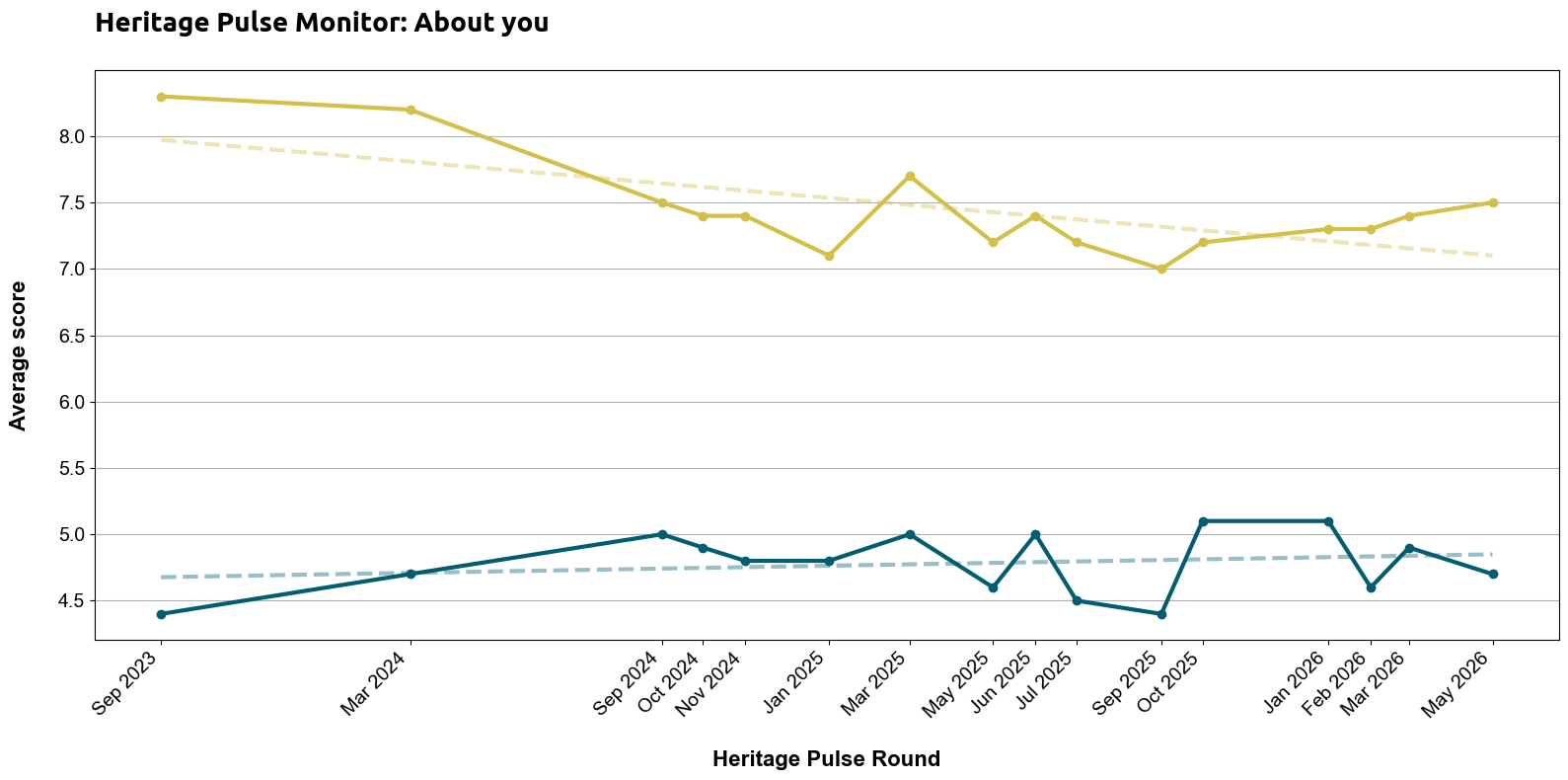
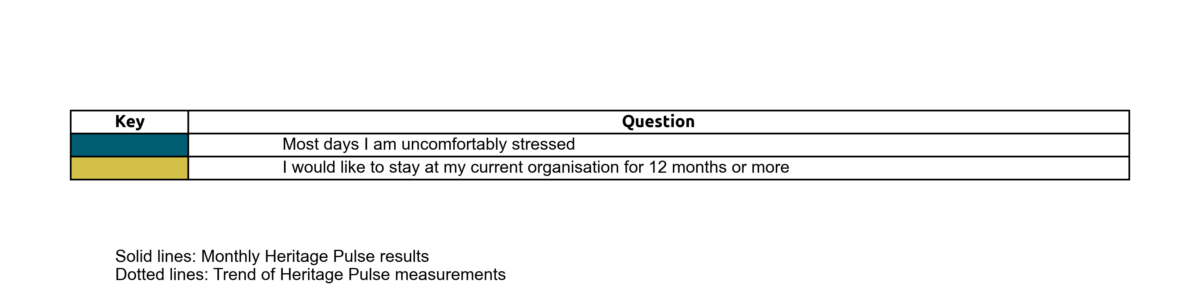
n=92
While the difference between the two measures remains less than three points, this month we saw a small bucking of the trend. Fewer respondents reported uncomfortable levels of stress and more said they would like to remain at their current organisation for 12 months or more.
Panel confidence remains steady in face of organisational challenges
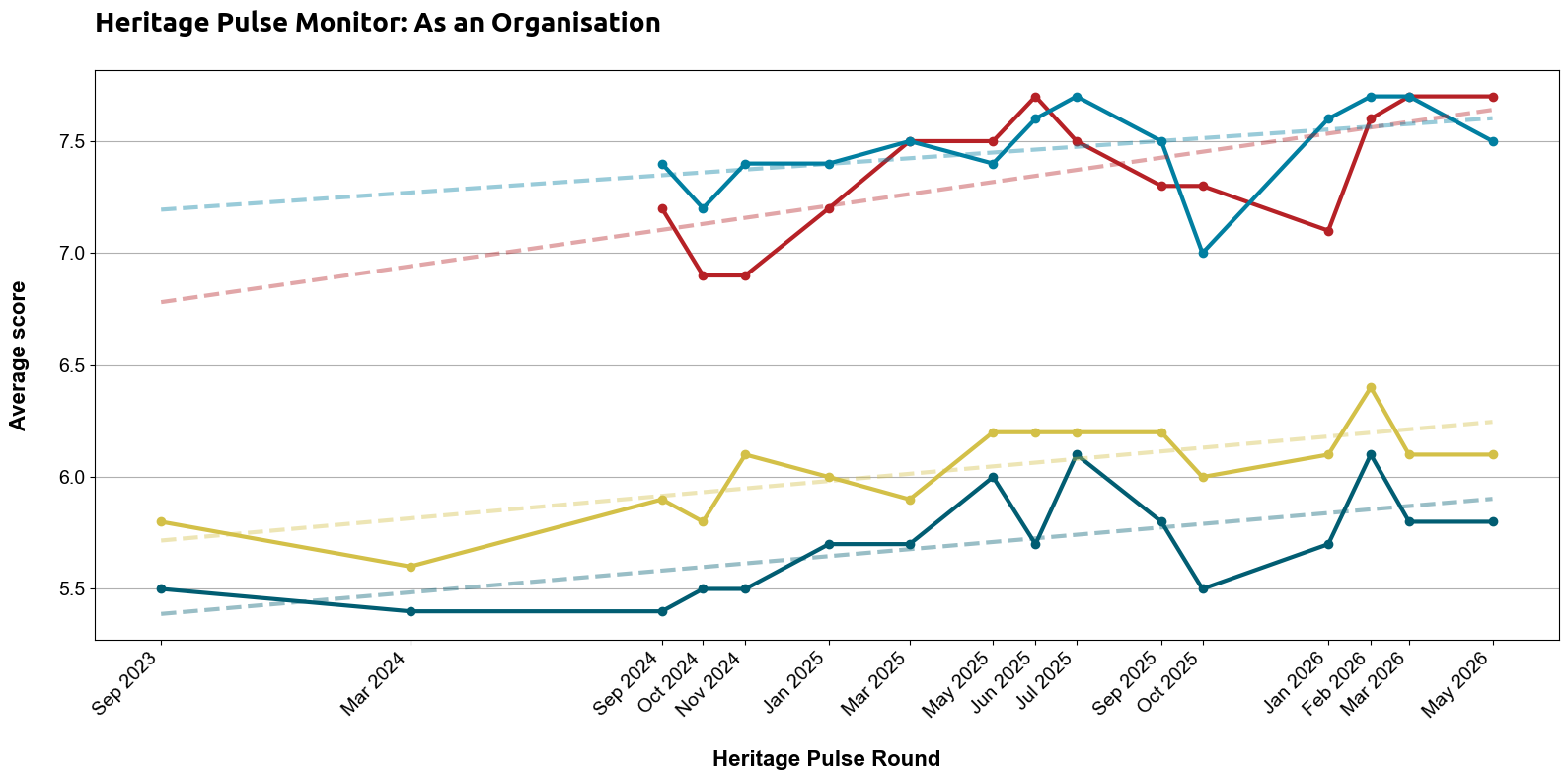
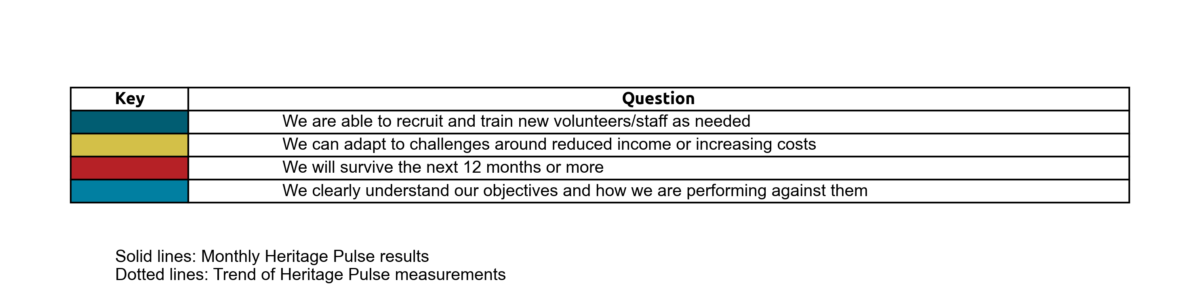
n=92
Scores across all four measures, while remaining static this month, continue their long-term upward movement.
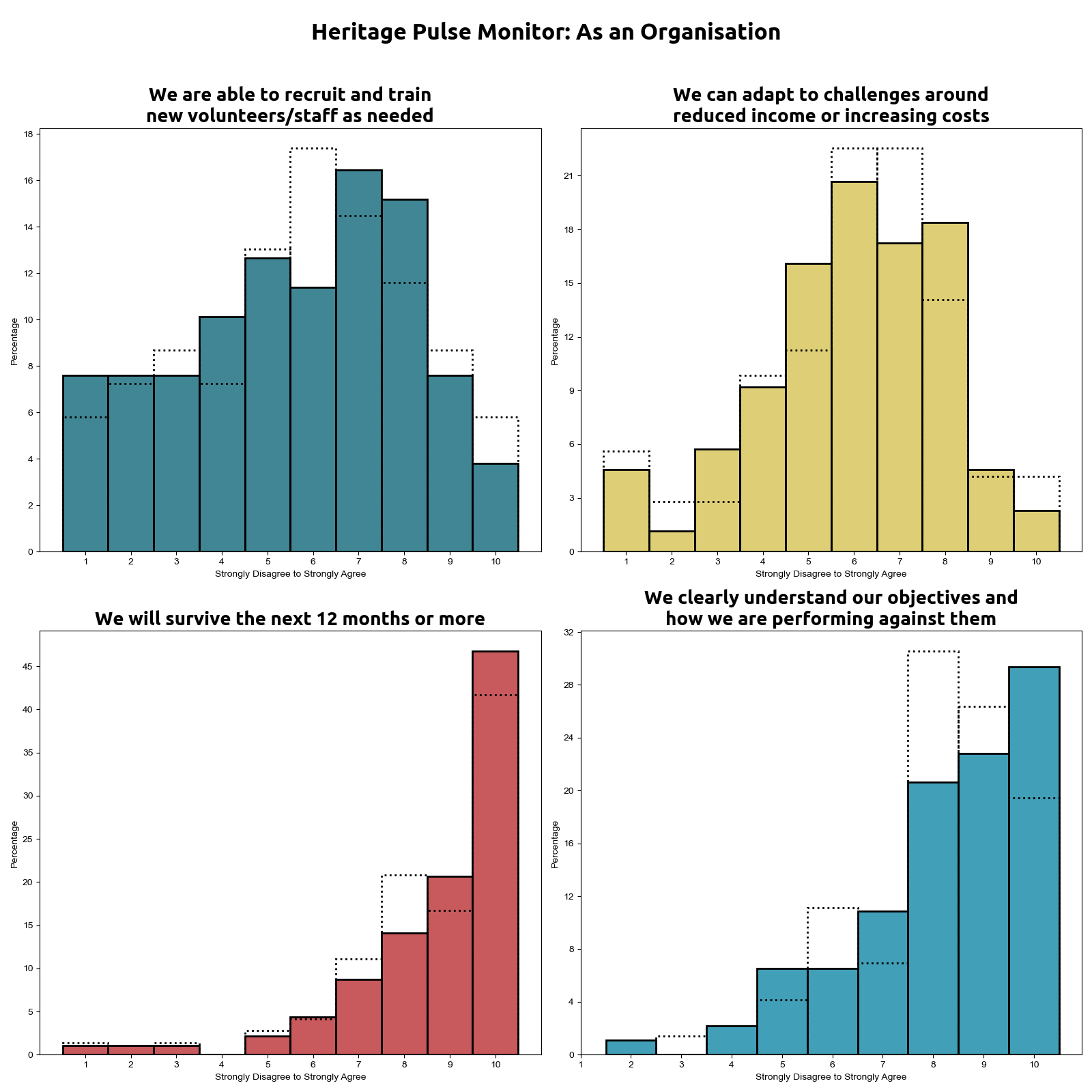
n=92
Solid bars: May 2026 response distribution / Dotted bars: March 2026 response distribution
How representative of the Heritage Pulse panel were the May 2026 respondents?
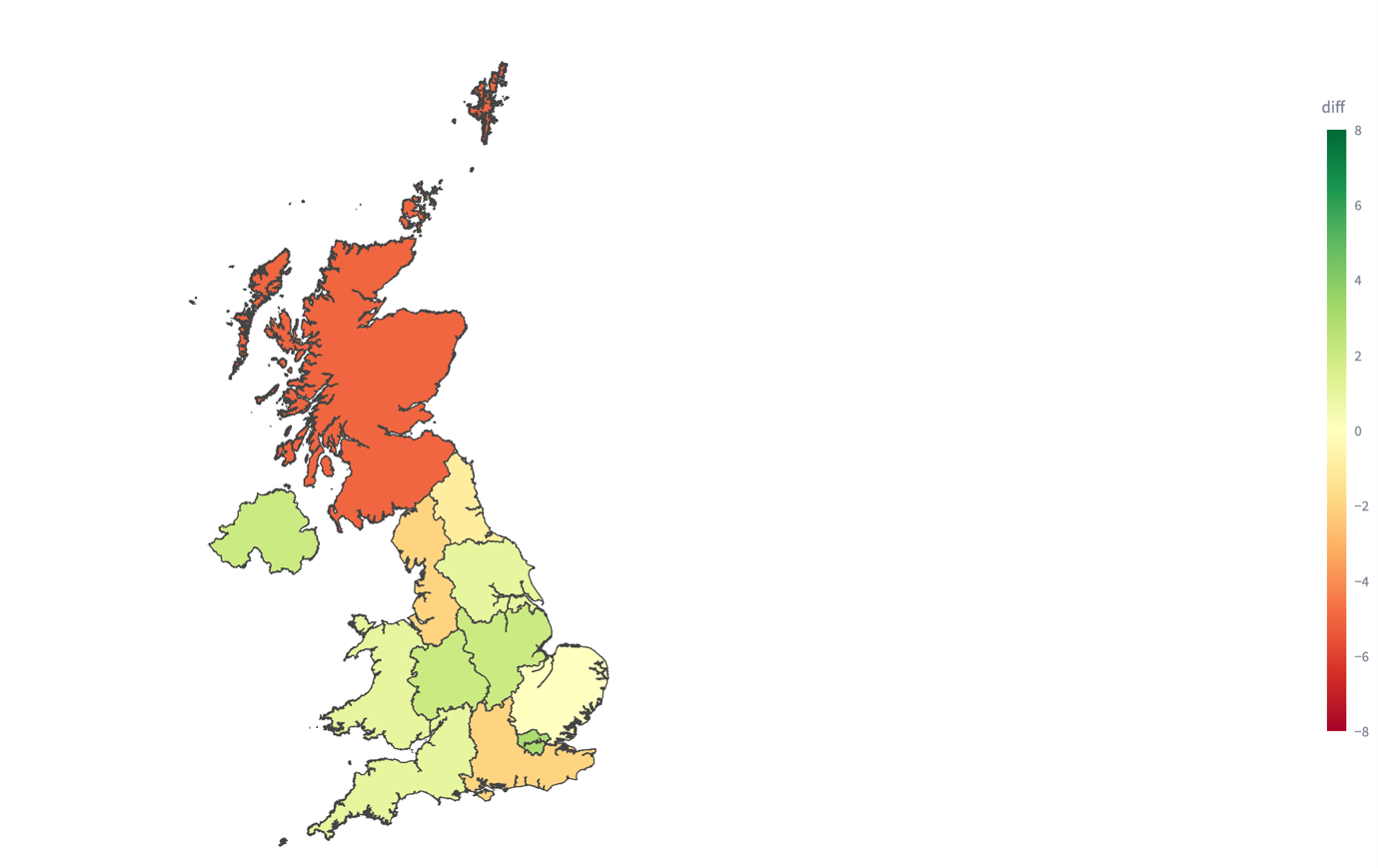
This month, London (+3 points) was the most overrepresented region in this survey. By contrast, Scotland was underrepresented, five points lower than its panel average.
ENDS

Pingback: Full results: May 2026 (Intangible Cultural Heritage) - UK Heritage Pulse