
Photo credit Michał Jakubowski on Unsplash
Executive Summary
In October 2025, we received 147 responses to at least one question about heritage crime or the monthly Pulse Monitor questions, which track the individual and organisational resilience of respondents.
Key findings from the research exploring heritage crime and its impact show:
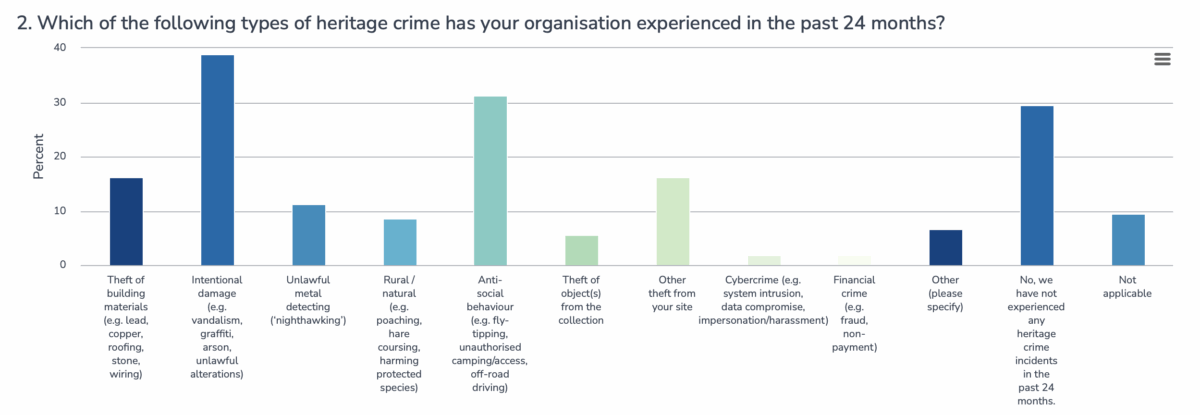
- 39% of respondents reported intentional damage (e.g. vandalism, graffiti, arson, unlawful alterations), and 31% of respondents experienced anti-social behaviour (e.g. fly-tipping, unauthorised camping/access, off-road driving).
- However, 30% told us that no heritage crime incidents took place at their site in the past two years.
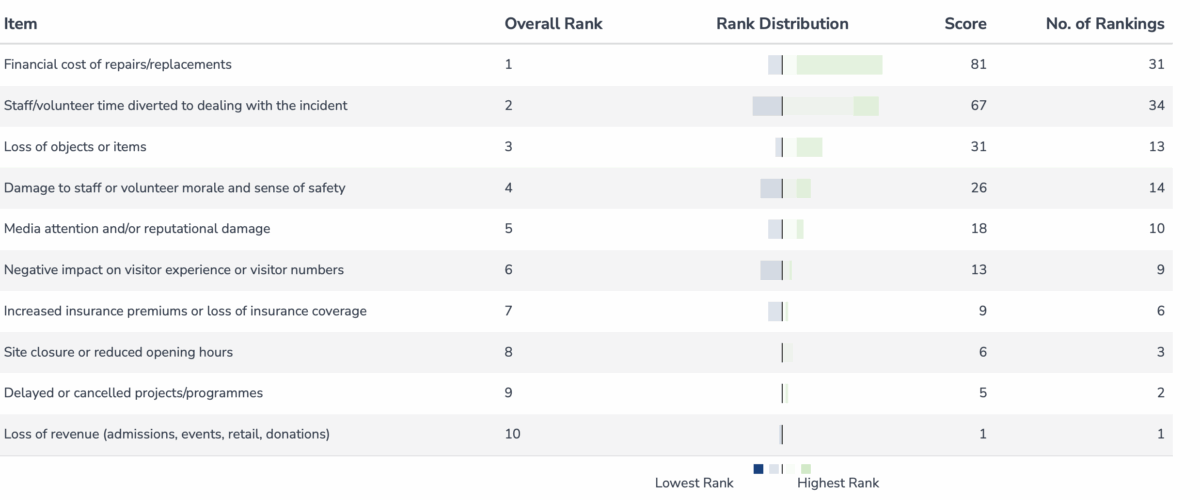
- The financial cost of repairs and replacements is the greatest impact of heritage crime experienced by the panel.
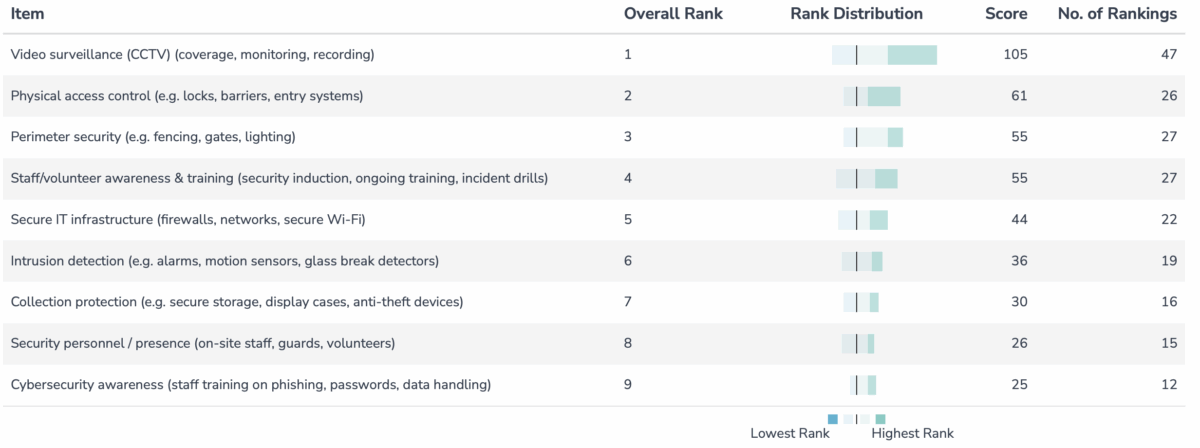
- If they had the budget, respondents would prioritise installing video surveillance.
Pulse Monitor
Taking the pulse of the people who care for our shared heritage:
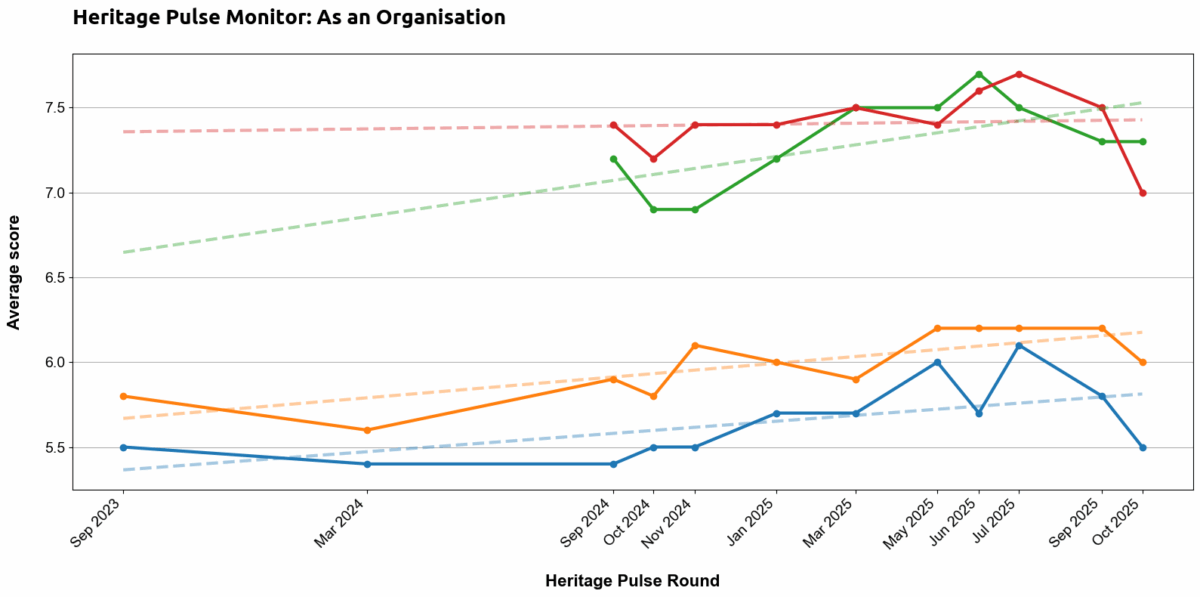
- “We clearly understand our objectives and how we are performing against them” fell by half a point (7.5 to 7) – its lowest recorded Pulse Monitor score.
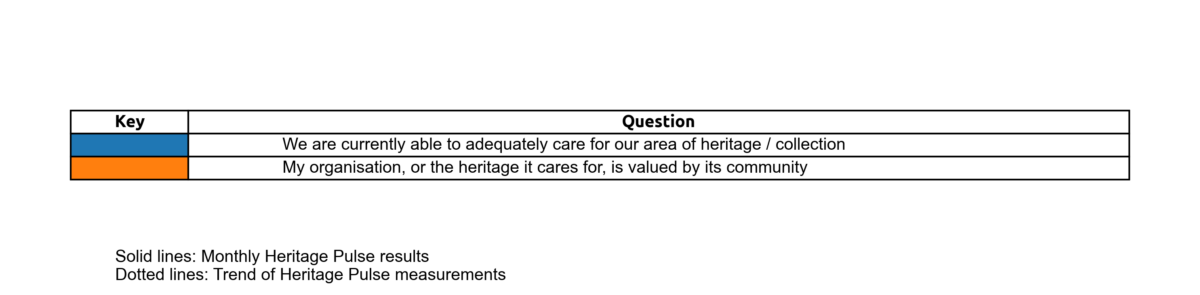
- “We are currently able to adequately care for our area of heritage / collection” fell by more than half a point (6.5 to 5.8) – this measure’s lowest rating since March 2024.
- “Most days I am uncomfortably stressed” increased by more than half a point (4.4 to 5.1) – the highest recorded level.
Caution should be exercised when considering these exceptional scores, which could be a result of question order effects. The focus on the respondents’ personal experience of heritage crime could have primed them to think about particularly negative aspects of their work while answering the Pulse Monitor questions.
Survey Report (Heritage Crime)
Almost four-in-ten respondents experienced intentional damage in the past two years
n=105
Over the past 24 months, 39% of respondents reported incidents of intentional damage (such as vandalism, graffiti, arson, or unlawful alterations), and 31% experienced anti-social behaviour (including fly-tipping, unauthorised camping or access, and off-road driving) at their sites. However, 30% reported no heritage crime incidents.
When segmenting for different types of organisation:
- Over half of respondents working for organisations with a turnover of more than £1 million reported being victims of intentional damage, and one-in-three experienced theft of building materials.
- 50% of voluntary organisations reported that they had not experienced heritage crime in the past 24 months, whereas less than a quarter of organisations with paid employees said they had experienced no crime.
Panellists that reported experiencing an incident in the past 24 months were invited to provide more information via a free-text response, asking whether they had reported it to the police and their satisfaction with that process (n=48). Using a Large Language Model (LLM) to categorise those responses:
- 54% of respondents reported incidents to the police. Of those that reported the incident to the police, we asked the LLM to categorise their satisfaction with the police (positive, negative or neutral). Four in ten reported a positive experience, three in ten were not satisfied:
“The major break-ins were reported to the Police and their action led to the quick recovery… thanks to the smart work of our local PCSO.”
- Those that did not report the crime to the police were invited to record a reason why they did not, with many highlighting the important role of local government in resolving disputes:
“It varies from site to site, but many of the crimes were addressed through the planning system rather than the legal one.”
“We worked with neighbours and council to resolve the problem.”
The greatest consequence of heritage crime was the financial cost of repairs and replacements
n=46
Of those that experienced heritage crime in the past 24 months, we subsequently asked them to select their top three impacts.
The financial outcomes had the greatest consequence for heritage organisations, followed by staff and volunteer time diverted to dealing with any incidents. However, sites were able to keep operating after experiencing heritage crimes; closure, project delays and loss of revenue do not appear to have been felt by the panel.
Respondents would prioritise video surveillance if they had the budget
n=78
We asked the panel to select their top three security improvements they would make when budget allows. Installation of video surveillance is a clear priority for the panel, significantly ahead of other options.
We then asked respondents to identify the barriers that exist to improving security at their site. Again, using an LLM to categorise the qualitative responses (n=66), half of panellists identified financial barriers:
“The cost of tech to help monitor and deter incidents is prohibitive for an industry already under funded, but smart lighting and monitored CCTV are also part of the solution.”
“We are always restricted by lack of funds, but we have been really proactive in working out viable solutions.”
One in five respondents said there were physical issues with their site that prevented improvements:
“It’s simply too costly and difficult to patrol the whole site at all times, especially if a site is fully open access.”
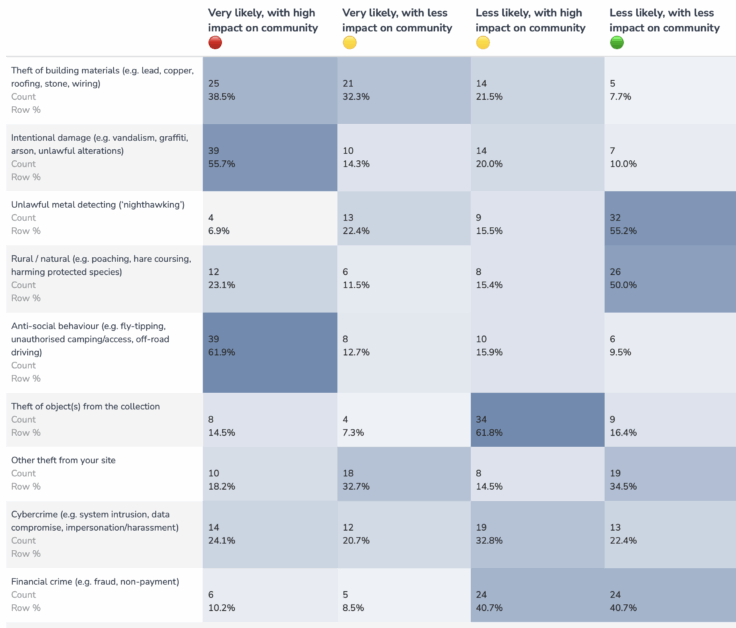
Anti-social behaviour poses biggest risk and impact for wider community
n=76
We asked the panel to think about the wider community, ranking the likelihood of types of crime by the impact.
- Anti-social behaviour is the most likely type of crime to take place with the highest impact, followed by intentional damage.
- Theft of objects from a collection is less likely but has a high impact when it occurs.
- Unlawful metal detecting (’nighthawking’) and rural/natural crime, such as poaching and hare coursing, were identified by the panel as being less likely and having a smaller impact when they occur.
Finally, panellists were invited to add any other comments, and some shared their strategies for dealing with heritage crime:
“For large site like our own, a weekly random site visit from a community officer at peak anti-social hours, whether on foot or in a vehicle.”
“Report, report, report!”
Other respondents highlighted the importance of acting promptly after being victims of heritage crime:
“In my experience heritage crime is not prioritised, no doubt due to lack of resources. However, heritage brings billions to our economy in tourism, and therefore financially we are operating at risk by not protecting it.”
“Crime in parks and gardens generates a perception these spaces are not safe, especially for women. We – the parks and heritage sectors – need to work harder to counter that fear and find solutions.”
Pulse Monitor
Pulse Monitor is a monthly health check on the heritage sector, measuring its resilience, confidence and ambition.
There are some exceptional results this month that are out of step with recent trends. This could be a result of question order effects, where the prior questions on heritage crime primed a new way of thinking about the Pulse Monitor. Further information on this phenomenon can be found here.
We should also note that this month had the fewest respondents to Pulse Monitor (n=76) this year, meaning we are more likely to see outliers making a difference to the average scores.
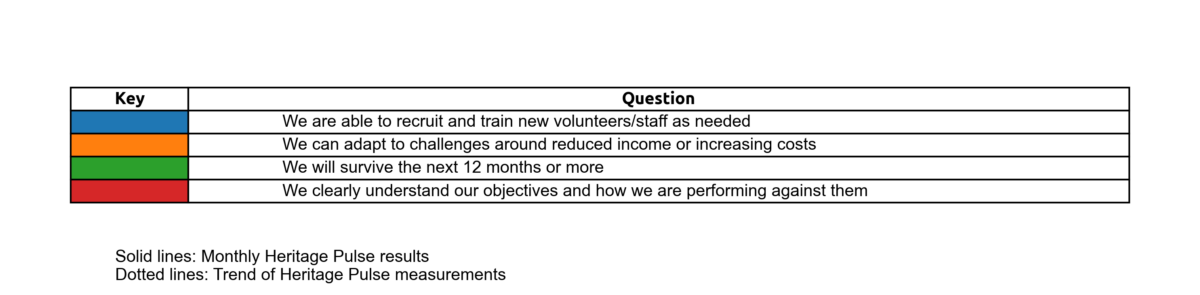
Panel’s confidence when facing organisational challenges falls
n=76
In October, there were near universal falls in the organisational confidence measures. Understanding of objectives and performance fell by 7% in a month to its lowest recorded level (7.5 / 10 to 7 / 10).
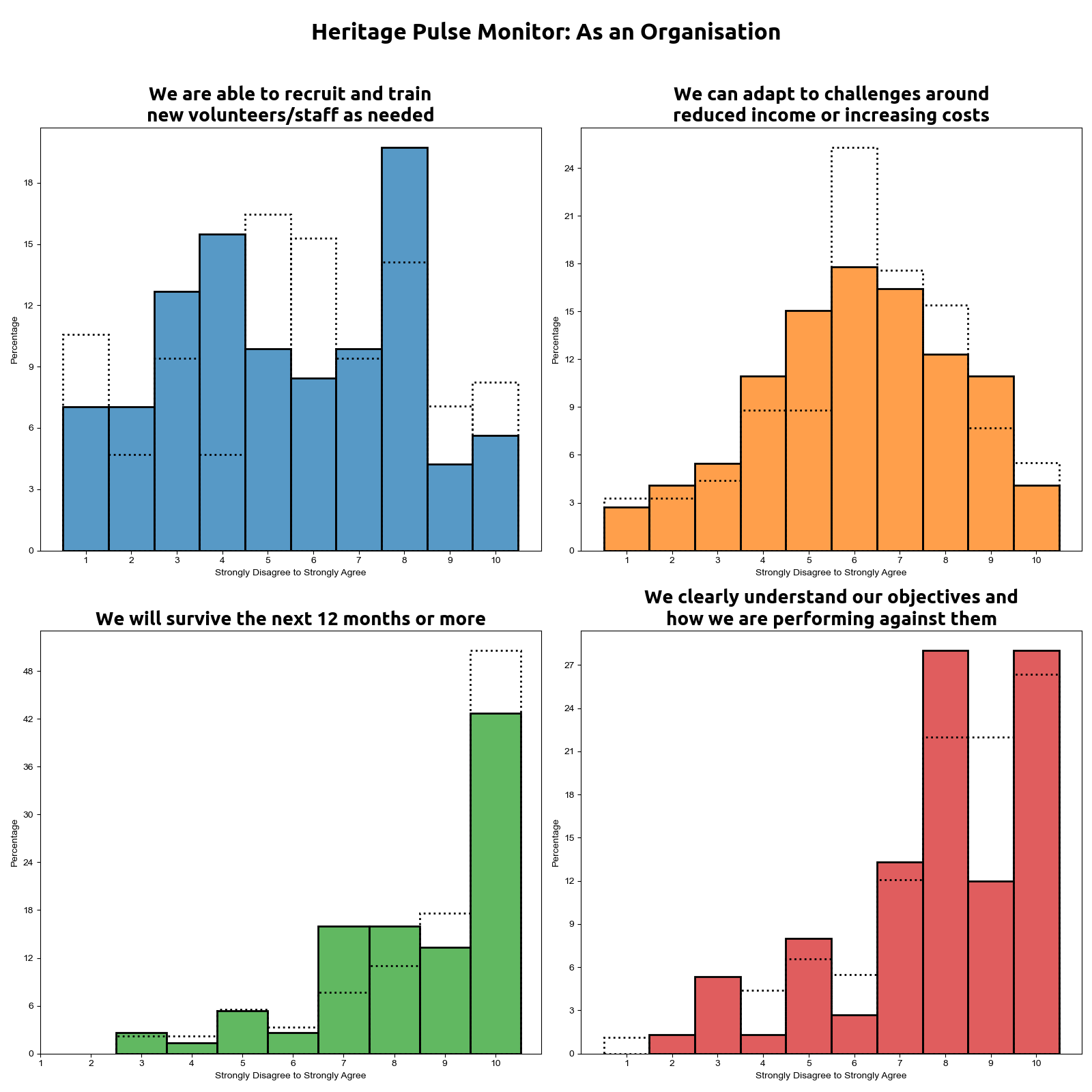
The understanding of objectives and performance has the widest distribution of responses this month. While more respondents this month scored 10 / 10 for this measure than in September, there were increases in lower scores between 2 – 5 / 10 that contributed to the lower result.
Respondents believe they are less able to care for their heritage

n=76
This month saw an 11% fall in panellists’ belief that they can adequately care for their collection or area of heritage. While there was a slight fall this month, respondents continue to have confidence that the community values their heritage.
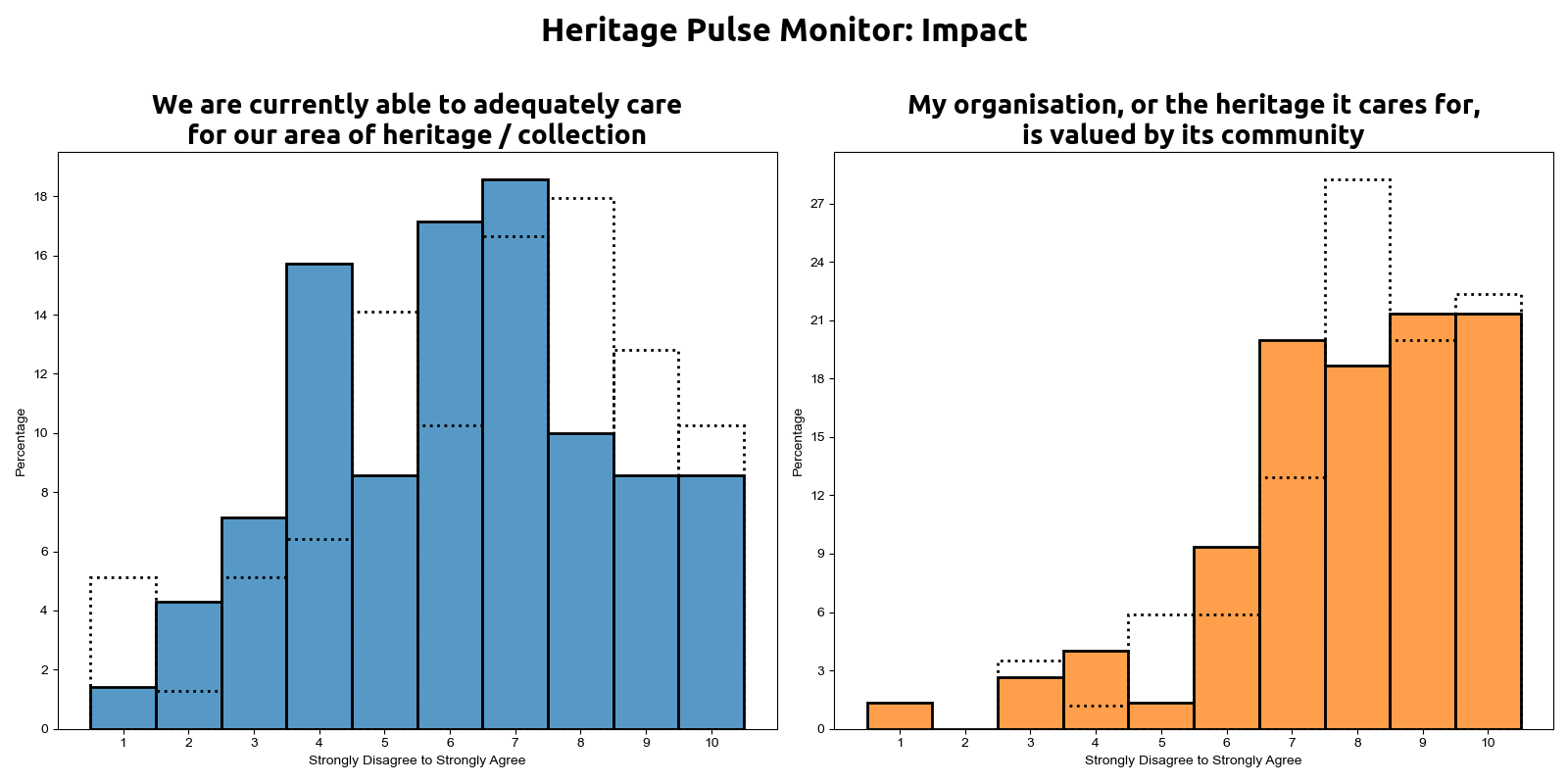
The perception of heritage’s value to the community has the narrowest distribution of responses of all the Pulse Monitor questions this month. The fall in respondents’ belief in their ability to adequately care for their heritage is driven by falls from 8-10 / 10 to between 4-7 / 10.
Reported stress of panel increases
n=76
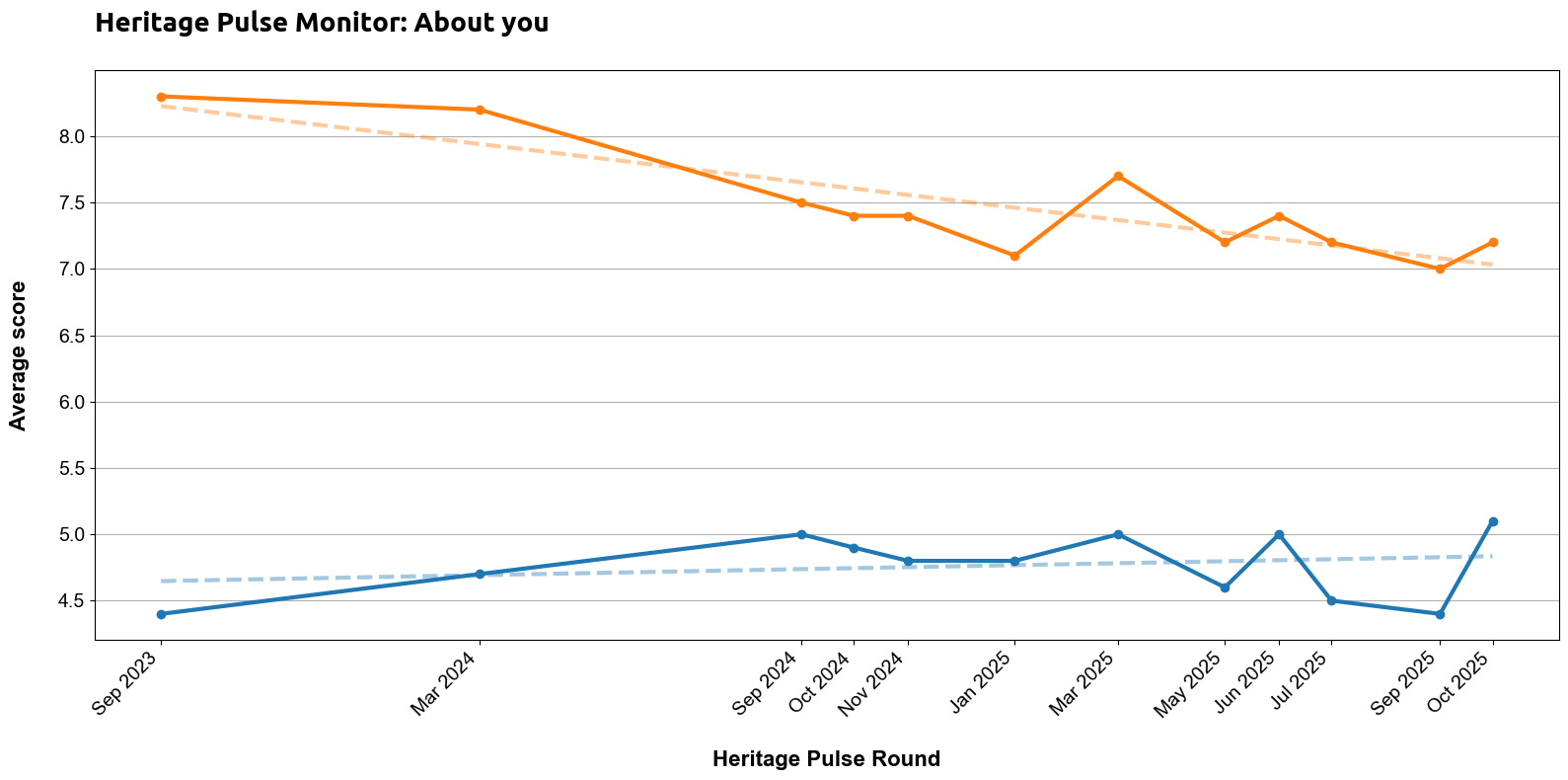
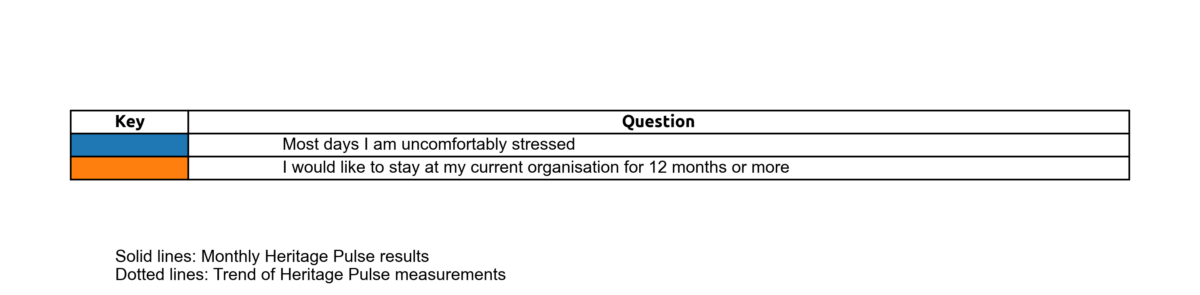
This month we saw the reported stress of the panel rise to 5.1 / 10, a 16% increase on last month and the highest ever score for this measure. Respondents wishing to remain at their current organisation increased slightly this month.
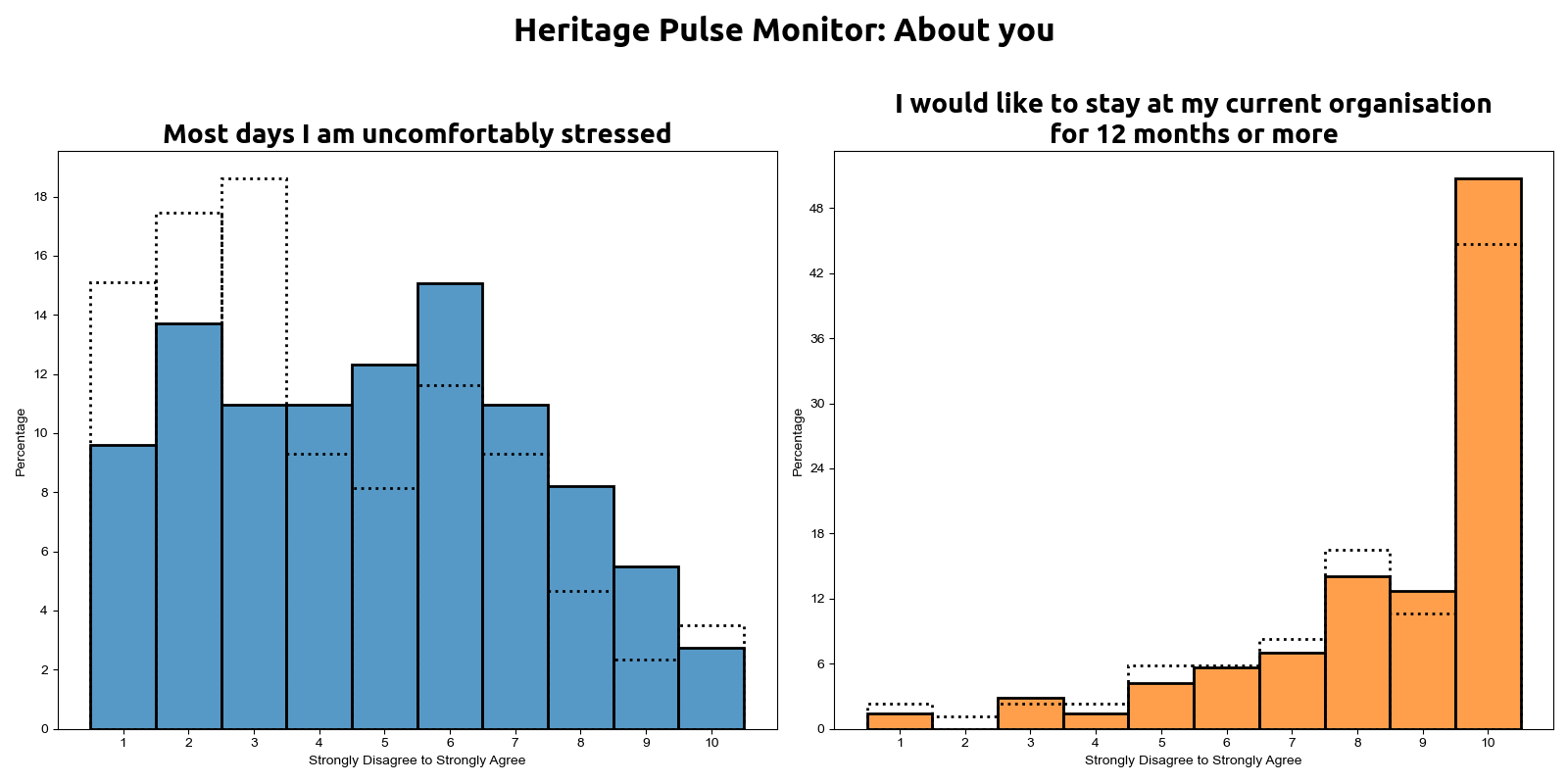
In terms of the response distributions, the increase in reported stress was driven by a shift away from strongly disagree, with falls in 1-3 / 10. When asked about their intention to stay at their current organisation, panellists followed a similar pattern to September.
How representative of the Heritage Pulse panel were the October 2025 respondents?
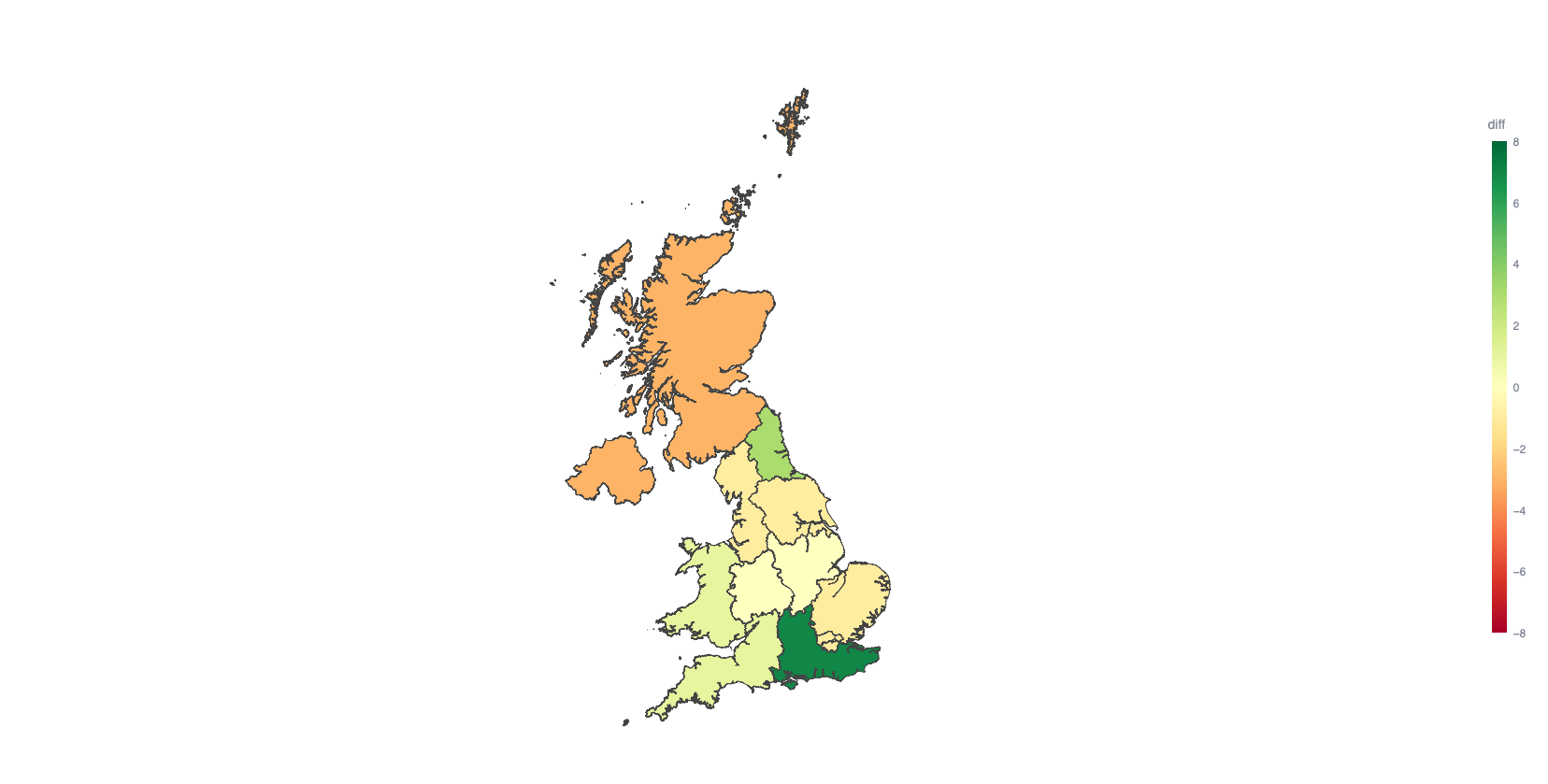
Compared to the whole panel, Scotland and Northern Ireland were the most underrepresented regions in this survey, four points lower than their overall position. By contrast, the South East of England was the most overrepresented region, seven points higher than its panel average.
ENDS

Pingback: Four in 10 heritage sites report intentional damage to their property - Museums Association
Pingback: Four in 10 heritage sites report intentional damage to their property - Art News