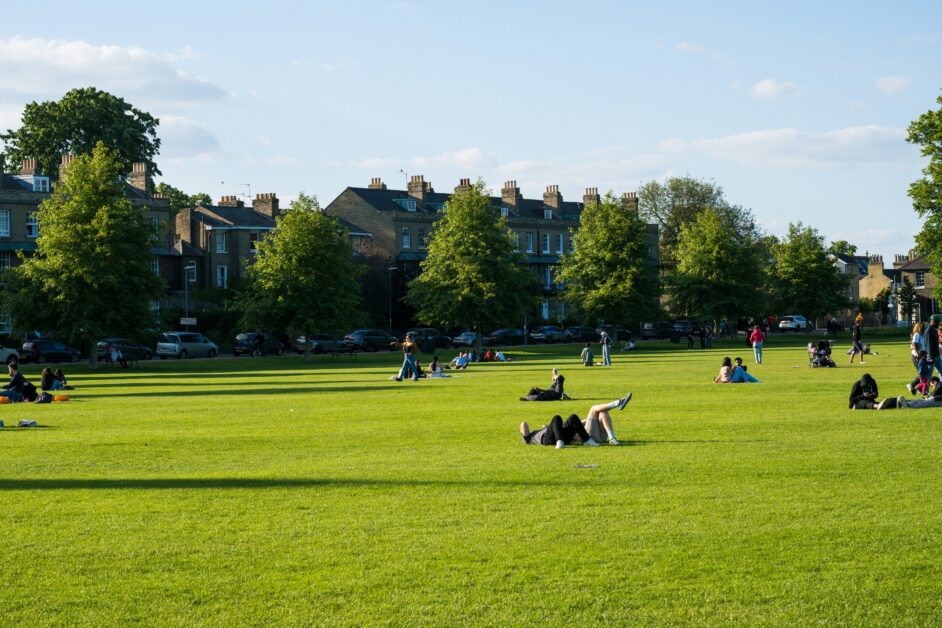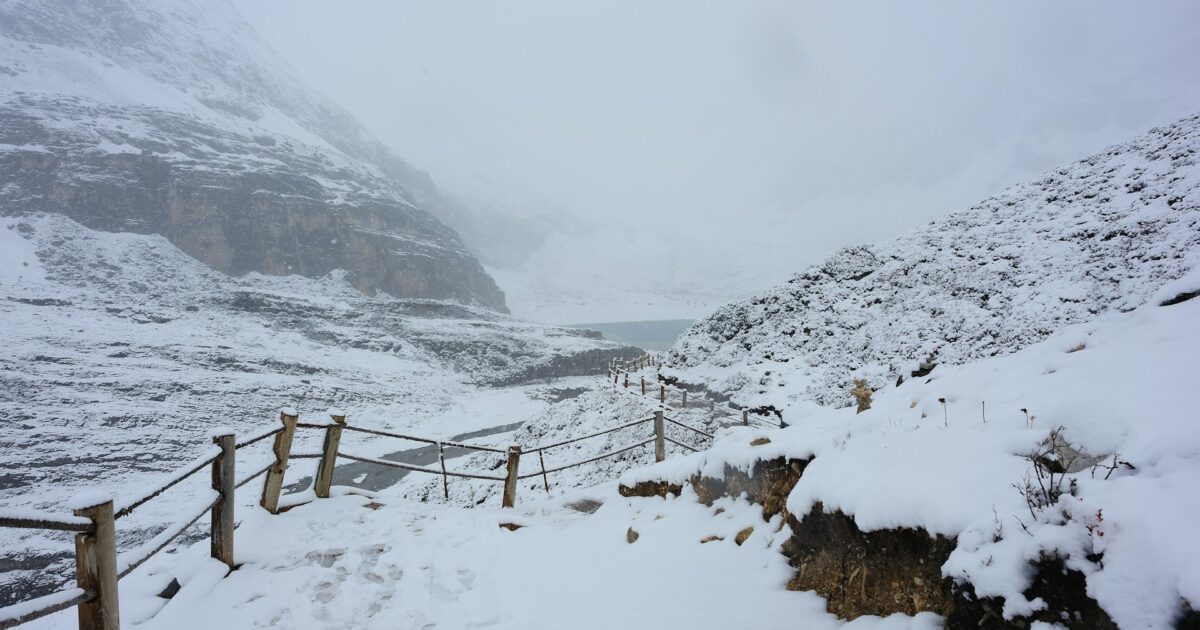
From decarbonising historic estates to managing coastal erosion, a focus group of heritage professionals met online in December 2025 to discuss the sustainability challenges facing the sector. Skills shortages, funding constraints, and the need to prioritise what can realistically be preserved emerged as critical concerns—alongside surprising public resistance to safety measures during extreme weather.
We are grateful to the individuals working and volunteering in the sector who contributed to this focus group. The views expressed are personal and do not necessarily represent those of their organisations.
Key Themes
Heritage organisations are grappling with multiple sustainability challenges, with key themes including:
- Decarbonising heat in protected buildings without compromising heritage value
- Skills shortages in traditional building trades, retrofit, and planning
- Climate adaptation for coastal heritage and historic landscapes facing extreme weather
- Local Authority Planning system capacity struggling to balance competing priorities
- Funding decline and the growing reliance on community volunteers
- Public engagement on climate action without appearing preachy
- Digital sustainability and the emerging carbon footprint of AI
Decarbonising heating
For Andy Maidment, sustainability manager at Royal Museums Greenwich, the challenge is clear. “The biggest challenge we have is how do we decarbonise our estate and how do we do it in a way that’s sensitive to the heritage nature of the buildings and the estates that we have,” he explained during the focus group.
The museum’s sites – including scheduled monuments and Grade I listed buildings within a UNESCO World Heritage Site- present particular difficulties. “We don’t have a lot of space or a lot of space that isn’t visible to the public,” Maidment noted. Finding locations for air source heat pumps that don’t compromise the historic landscape has become a pressing concern as organisations work to replace gas boilers with renewable alternatives.
Iain Boulton from the London Borough of Lambeth shared a success story: installing a ground source heat pump at Brockwell Park’s historic Brockwell Hall. The key, he said, was early stakeholder engagement to demonstrate how the installation could be integrated invisibly into the landscape. “Today you go to Brockwell Park, you can’t see where the pump is. It’s completely hidden”.
Pressures of the planning system
The planning system emerged as both a barrier and a bottleneck for sustainable heritage interventions. Planning officers in Scotland decreased by 28% between 2010 and 2023, whilst unfunded duties increased. Archaeological officers in local government fell by 38% over the same period.
The challenges aren’t one-sided. Derek Rankine, Head of Policy and Strategy from Built Environment Forum Scotland, noted that planning departments must contend with poor quality applications, missing information, and complex policy landscapes where priorities sometimes clash – biodiversity protection versus heritage preservation, for instance.
Martyn Todd, Chair of the Saintfield Community Association, pointed to another systemic issue: in Northern Ireland, planners must consult the Natural Environment Division of the Department for Communities, which currently has a waiting list for responses exceeding one year due to staffing pressures.
A deficit of specialist skills
Perhaps the most pervasive challenge discussed was the shortage of skilled professionals. Derek Rankine highlighted the scale of the problem: “Repairing, maintaining, and retrofitting our historic buildings is a huge problem – just getting hold of the people, the expertise needed to do that.”
The shortage spans traditional building skills, retrofit coordinators, and planning officers. The problem intensifies outside urban centres, with remote areas such as the Scottish Highlands and Islands being particularly affected. Heritage funding programmes requiring three quotes from contractors can founder when organisations struggle to find even one qualified tradesperson.
Training provision exists but remains insufficient. Derek Rankine noted that whilst traditional skills building centres in Stirling, Elgin, and Falkirk provide valuable training – including the UK’s highest number of stonemasonry apprenticeships – “the supply is just not high enough” to meet Scotland’s needs, where 46% of buildings predate 1946, compared to 32% UK-wide and 20% in the EU.
Martyn Todd shared the experience of Saintfield Community Association with clay mortar restoration. Lacking local expertise, they connected with specialists from Scotland and Limerick through the Historic Environment Division of the Northern Ireland Department for Communities. “Tapping into that sort of expertise to do something properly in a sustainable way has been very useful to us.”
Planning what to protect and how
Climate adaptation is an immediate operational challenge for some. Abby McSherry, Sustainability Officer for Newry, Mourne and Down District Council described her authority’s vulnerable coastal and industrial heritage: “We have our canal system, we’ve got a sea lock and a sea canal, industrial heritage on the coasts, corn mills, sea walls, harbours – all of those are under increasing threat from increased sea level rises and increased storminess.”
Without advance planning and awareness, deteriorating coastal defences structures risked in future being repaired with concrete rather than appropriate traditional methods. “Unless we start working on awareness at the moment, they’ll be done with concrete just slapped on top.”, McSherry feared.
Simon Gilmore from the Society of Antiquaries of Scotland articulated the harsh reality: “We are going to lose more stuff. Some of the actual historic environment assets that we have will be lost to the sea.” This has prompted the Society to develop prioritisation tools, including the Sustainable Investment Tool, which helps organisations assess heritage sites across multiple criteria, from heritage significance to community value, to make informed decisions about where limited resources should be directed.
Martyn from Saintfield noted that the river running through his organisation’s site, which once powered water mills, can now rise eight to ten feet during heavy rain. “There’s a worry there that with climate change will this be more of an issue.” The organisation has also had to consider whether yellow wind warnings should trigger park closures due to falling branches – a question of public safety that never previously arose.
Pushback against public safety
A number of participants described a troubling pattern: implementing necessary safety measures during extreme weather events, only to face public backlash. Abby explained: “When there’s a yellow wind warning we do close the parks. We then get a backlash from the public saying, ‘oh, you’re a load of wussies… we used to live with wind when I was a kid.'” Convincing the public remains difficult. “It’s still trying to persuade people that, yes, maybe nothing happened this time, but it’s happened in the past and we don’t want it to happen again.”
Iain Boulton from Lambeth confirmed similar experiences: “We still get backlash from the public, but we’re just frank and say, look, the alternative is that we have to keep this entire section of the cemetery or park closed.”
Ironically, as one participant noted, the public’s desire to access these heritage spaces – even when potentially dangerous – demonstrates their deep value to communities.
Engaging without lecturing or hectoring
On the broader question of communicating sustainability to the public, Andy Maidment shared findings from audience research at the National Maritime Museum. Visitors indicated they do want engagement on climate change and sustainability, “but there’s a very tight line to be trod because people want to be informed, but they also don’t like to feel like they’re being told off or lectured at.”
The museum has incorporated ocean literacy and climate change into exhibitions and major public events, but Maidment emphasised the need for careful messaging. “We do have that responsibility to engage on this subject, but we have to not do it in a way that feels like it’s lecturing or talking down to people.”
The Funding Crunch and the Volunteer Burden
Declining public funding featured prominently in the discussion. Martyn observed: “Over the last 10-15 years the amount of money that is available from local authority or central government is just declining.” His community organisation was fortunate to benefit from the support of an American benefactor whose ancestors came from their village, providing both match funding and the capital to purchase a three-acre field.
Abby highlighted a particular challenge for community groups: “A lot of this work is being done now and handled by community groups or community associations without the cashflow of local government, and yet they are still being expected to pay out money and reclaim it back. Where do they get that initial injection of capital?”
Iain Boulton noted another funding issue: Section 106 planning gains often come with geographic restrictions, preventing councils from directing money from wealthier areas to where heritage need may be greater.
Martyn Todd suggested this shift towards community-led heritage preservation represents a cultural moment: “If something in your community matters to you, you’re going to have to get out and do something about it yourselves.” Yet recruiting volunteers, particularly younger ones, has become increasingly difficult – a challenge for the sustainability of volunteer-led organisations themselves.
Digital sustainability
A newer consideration – digital sustainability and the environmental impact of AI – is beginning to enter organisational discussions. Andy Maidment reported that his museum’s sustainability group recently raised questions about AI policy and environmental impact, though answers remain elusive. Some argue that AI creates efficiencies that offset its energy consumption, though Maidment expressed scepticism.
Claire Marchetti, Carbon and Sustainability Manager at Historic England, noted that AI has become divisive – some view it as antithetical to climate goals, whilst others emphasise its accessibility benefits, such as opening archives to people unable to travel or assisting with note-taking. Historic England is planning webinars to explore these debates.
The conversation also touched on the broader challenge of digital hoarding in heritage organisations and the carbon footprint of cloud storage – complicated by the fact that major providers like Amazon, Microsoft, and Google remain opaque about their emissions.
Looking ahead
The focus group further illuminated a sector under strain, attempting to balance heritage preservation with climate adaptation, skills development with resource constraints, and public engagement with public safety. As Simon Gilmore noted, difficult prioritisation decisions lie ahead about which heritage assets can realistically be preserved in the face of climate change.
Yet the discussion also surfaced resilience: organisations sharing expertise across borders, successful installations of renewable technology in historic settings, tools emerging to support decision-making, and – despite the challenges – public resistance to site closures that speaks to the enduring value communities place on their heritage.
The participants made clear their feeling – the heritage sector should no longer treat sustainability as a peripheral concern. It has become central to the fundamental question of what, and how, we preserve for future generations.