Executive Summary
In January, February and March, UK Heritage Pulse is undertaking The Big Think – a sector-wide conversation shaped around three critical questions, one each month. This Big Think is centred around Place.
This three-part series aims to:
- Understand how heritage organisations currently engage with place, and their ambitions
- Map the practical relationships and challenges in place-based work
- Identify what support would strengthen heritage’s contribution to community cohesion and resilience
For the purposes of this research, ‘place’ refers to a meaningful location, and definitions vary depending on where you are and who you ask. It could mean:
- a local community,
- a natural landscape, or
- an entire city
Survey Report (The Big Think)
In February our objective was to understand relationships with partners, policy makers and others.
We received 126 responses to at least one question about Place, or the monthly Pulse Monitor questions, which track the individual and organisational resilience of respondents.
This is an interim report. In the subsequent Big Think surveys, panel members who did not complete this survey will have the opportunity to answer these questions. We received an additional responses to January’s survey.
The final section asked the monthly “Pulse Monitor” questions, which track the individual and organisational resilience of panel members.
Key findings from the research exploring Place
- Three-quarters of respondents are actively working with community groups and volunteers, and these relationships are most commonly cited as their most important relationships in their place-based work.
- Heritage organisations boast a wide network, with a few deep partnerships. Panel members are prioritising relationships within their community, local government and heritage organisations.
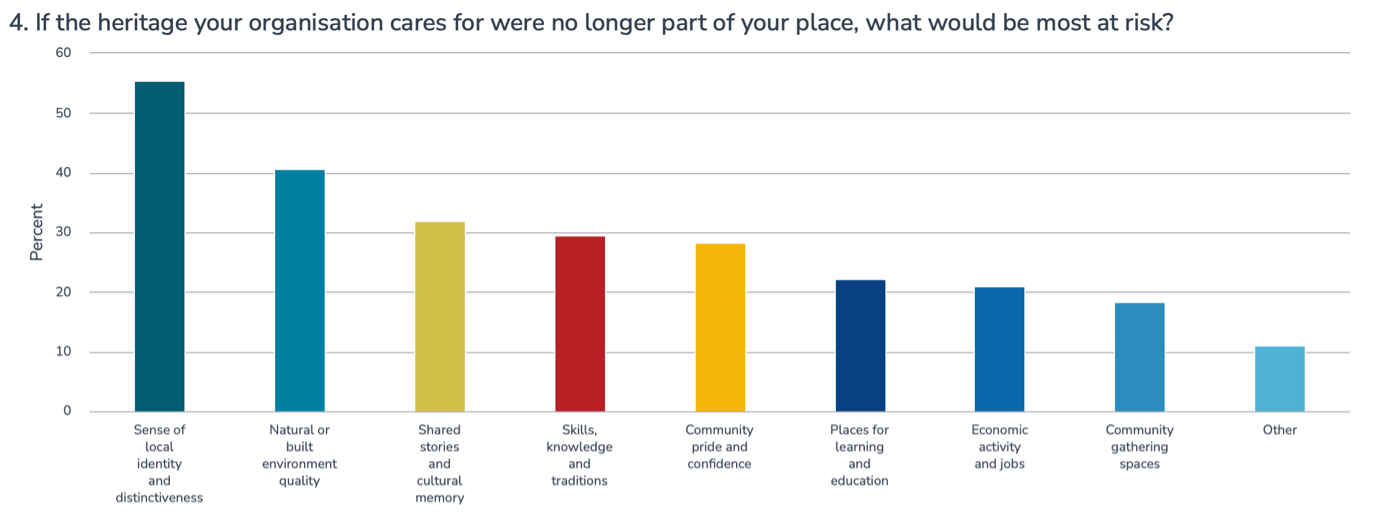
- The panel believe the heritage within their place is intertwined with a sense of local identity and distinctiveness, as 55% of respondents state that would be most at risk if the heritage were lost, a greater impact than physical loss.
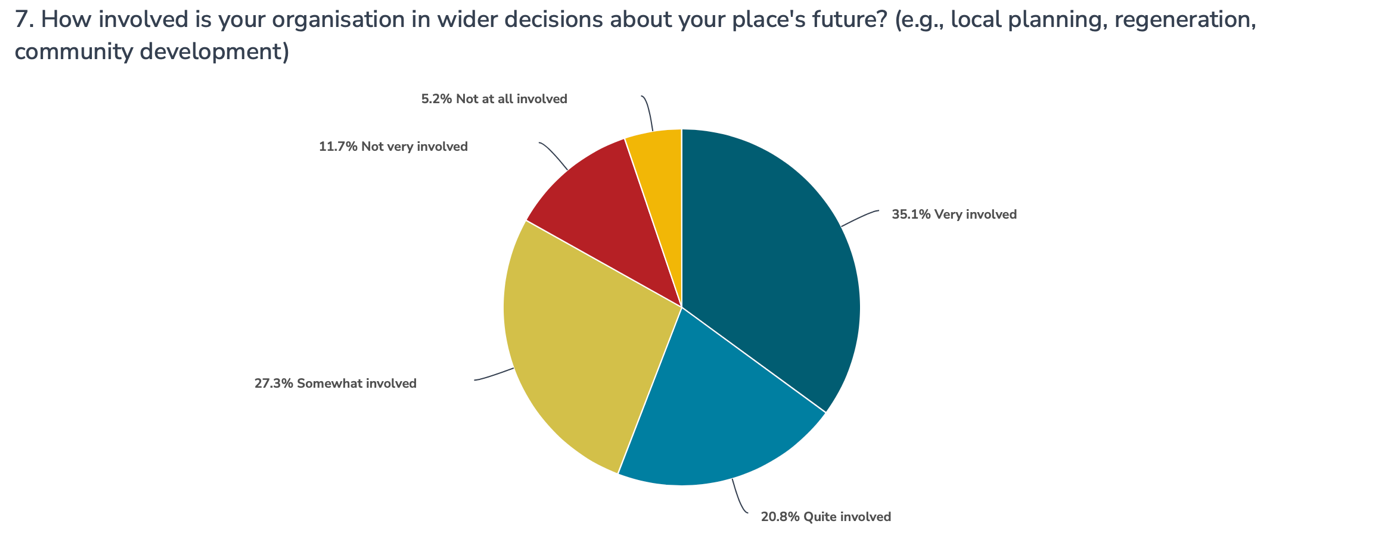
- More than half of respondents say heritage is involved in discussions about their place’s future, and 55% say that heritage is an essential part of the strategy.
Pulse Monitor
Taking the pulse of the people who care for our shared heritage.
This month saw some shifts across the longitudinal measures, though it remains to be seen whether these represent a sustained trend. This month we found:
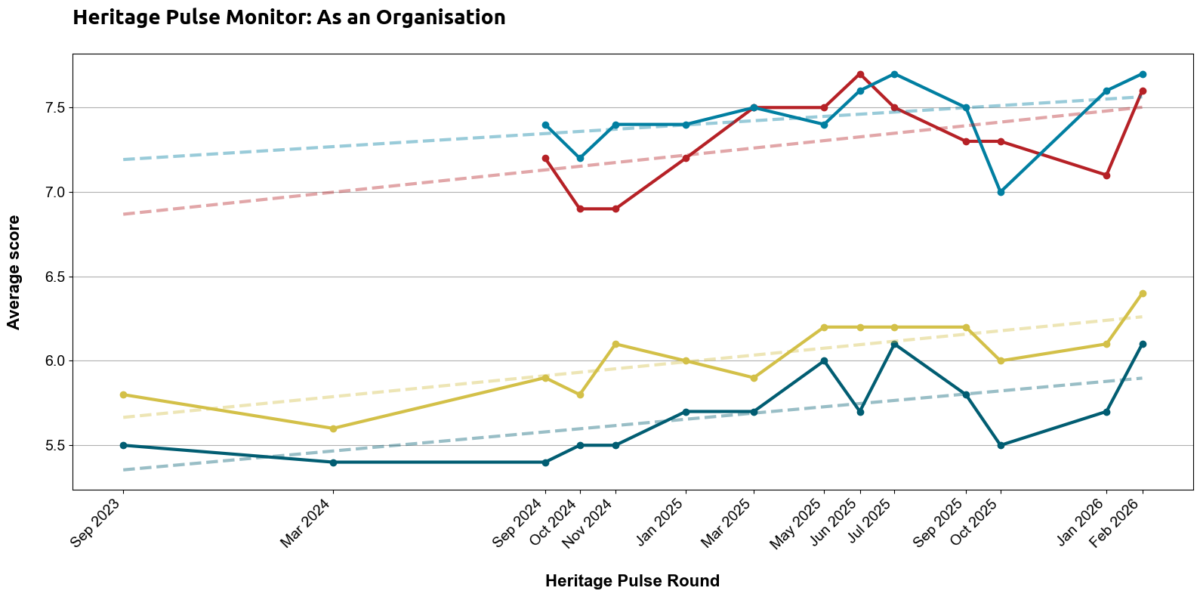
- “We are currently able to adequately care for our area of heritage/collection” increased to 7.1 / 10 – its highest recorded level.
- “We clearly understand our objectives and how we are performing against them” increased to 7.7 / 10 – the highest level since July 2025.
- “Most days I am uncomfortably stressed” decreased to 4.6 / 10 – the measure’s lowest score since October 2025.
The Big Think: Place
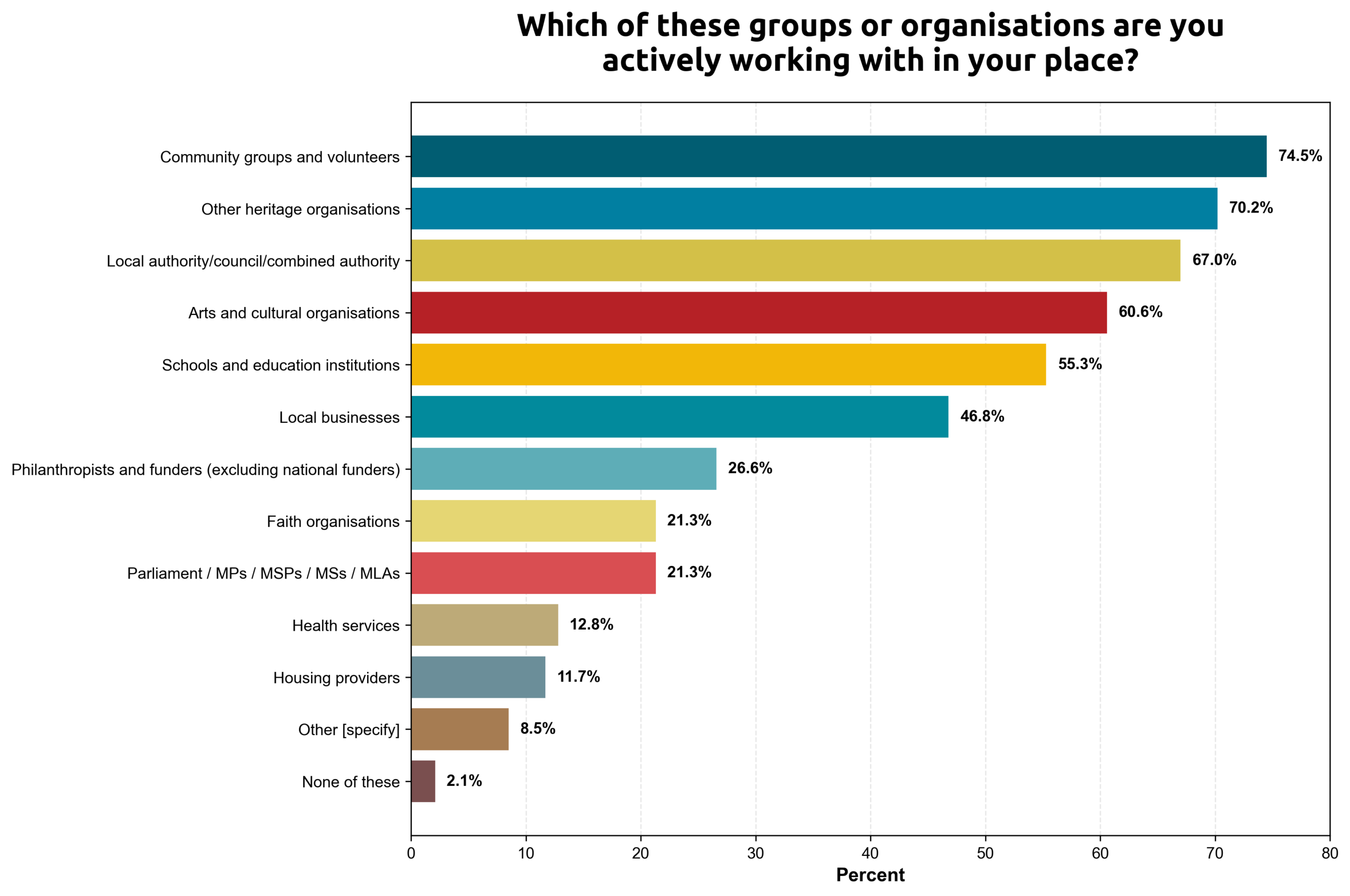
Community, heritage and councils are the biggest users of local heritage
n=94
Echoing the findings of January’s edition of The Big Think, 75% of respondents are actively working with community groups and volunteers. Seven-in-ten work with other heritage groups, and two-thirds with local government or combined authorities.
When segmenting for different types of organisations, we can see emerging data that this experience is not universal. After community groups, voluntary organisations are more likely to work with schools and education institutions than other heritage organisations and local government. Organisations with a turnover greater than £1 million work with local government and other heritage organisations, ahead of community groups.
Heritage organisations are well-networked, but strategically selective in their closest relationships
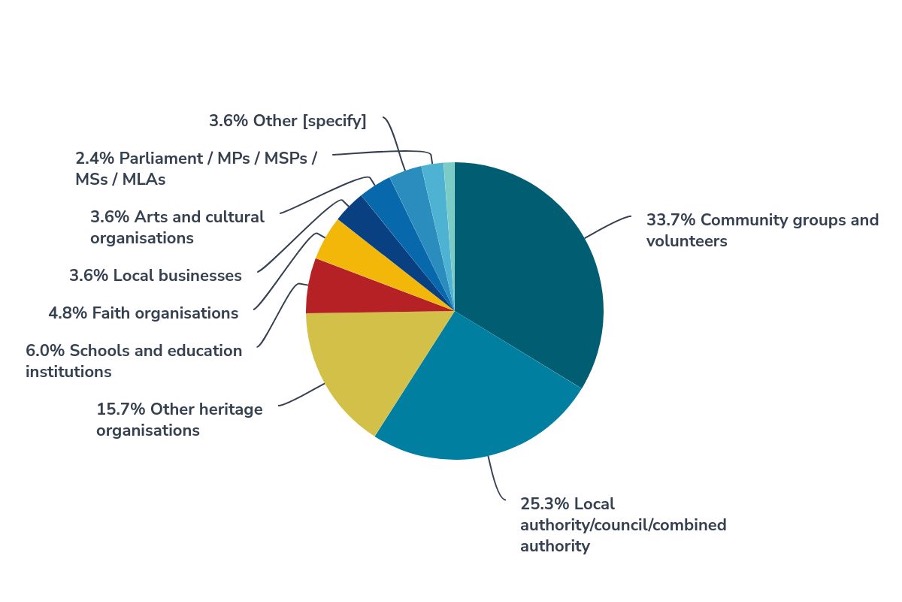
Of those you selected, which relationship is currently most important to your place-related work?
n=83
One-in-three respondents regard their relationship with community groups and volunteers as the most important relationship, and a quarter believe this for their relationship with local government. This is in line with the previous question and reflects the volume of work already undertaken by the panel with these groups.
However, the broad nature of this work is not mirrored in their partnerships. While 60% of respondents work with arts and cultural organisations within their place, only 4% of respondents select this as the most important relationship.
We can also see that the sector also has weaker relationships with regional and national elected representatives (2% regard this as the most important relationship), which may indicate a gap in political advocacy and influencing.
Taken together, this suggests a two-tier collaboration landscape: an inner circle of primary partners (community groups, local authorities, and other heritage bodies) surrounded by a much broader network of occasional or supporting collaborators.
Panel link heritage within a place to a sense of local identity and distinctiveness more than the physical product
n=81
55% of respondents state that the sense of local identity and distinctiveness would be most at risk if heritage was no longer part of their place. Four-in-ten believe that the natural or built environment quality would be most at risk if their organisation were no longer part the place.
For the panel, heritage is connected to a place’s character and self-perception, and losing this would have a far greater impact than the tangible, physical dimension of heritage loss on the everyday experience of a place.
Over half of places have a strategy where heritage is essential
n=80
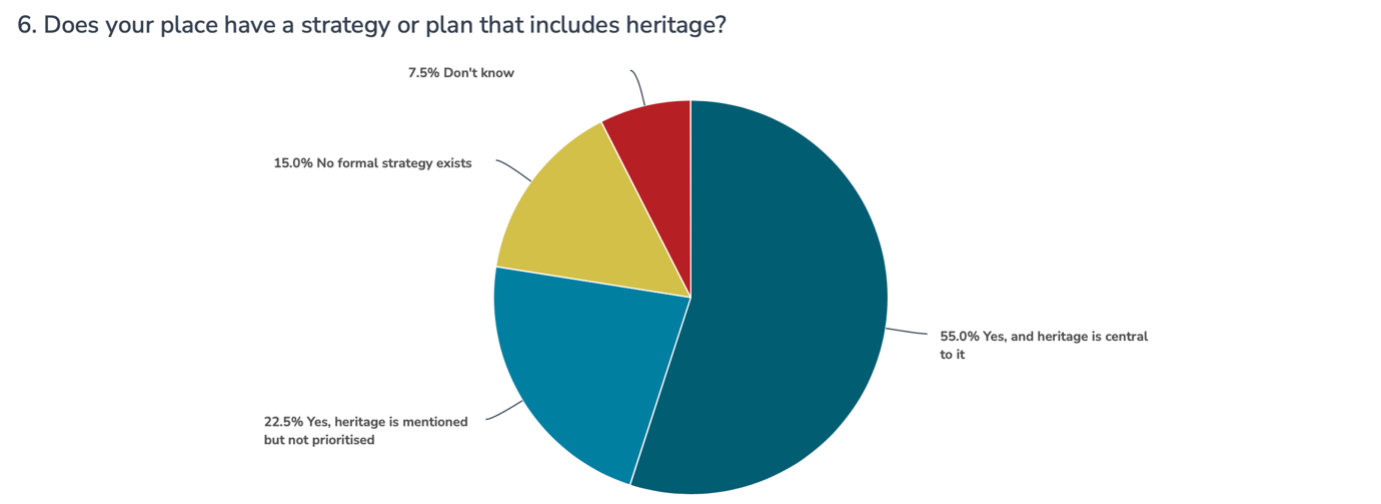
55% of respondents confirmed their place has a strategy where heritage is central, indicating commitment to heritage within planning for the future of a place.
55% say that heritage is involved in discussions about their place’s future
n=77
The largest group of organisations reported meaningful involvement in wider decisions about their place’s future, with 35% describing themselves as very involved, suggesting a strong sense of civic engagement.
Pulse Monitor
Pulse Monitor is a monthly health check on the heritage sector, measuring its resilience, confidence and ambition.
We should note that this month had fewer respondents to Pulse Monitor (n=82) than in January, meaning outliers are more likely to make an outsize difference to the average scores.
Organisational outlook shows some positive movement
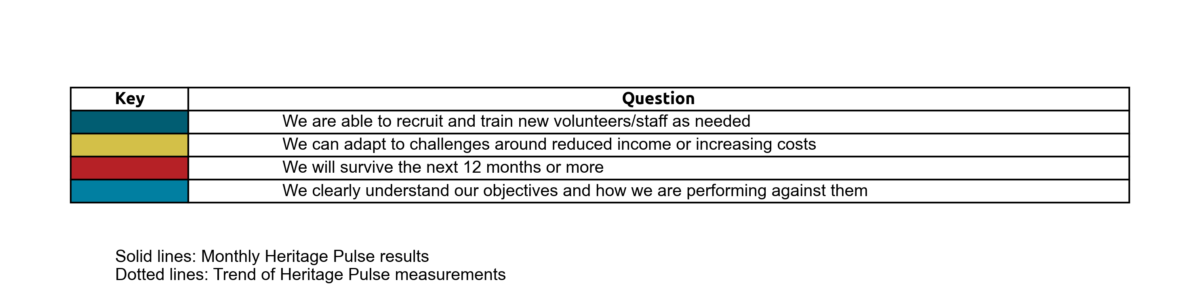
82 panel members completed this question
This month saw upward shifts across several organisational measures, though the picture varies by indicator. The panel’s confidence in their objectives and performance returned to 7.7 / 10, matching the level recorded in July 2025, while belief in their ability to adapt to changes in income or costs reached 6.4 / 10 — the highest level recorded for that measure.
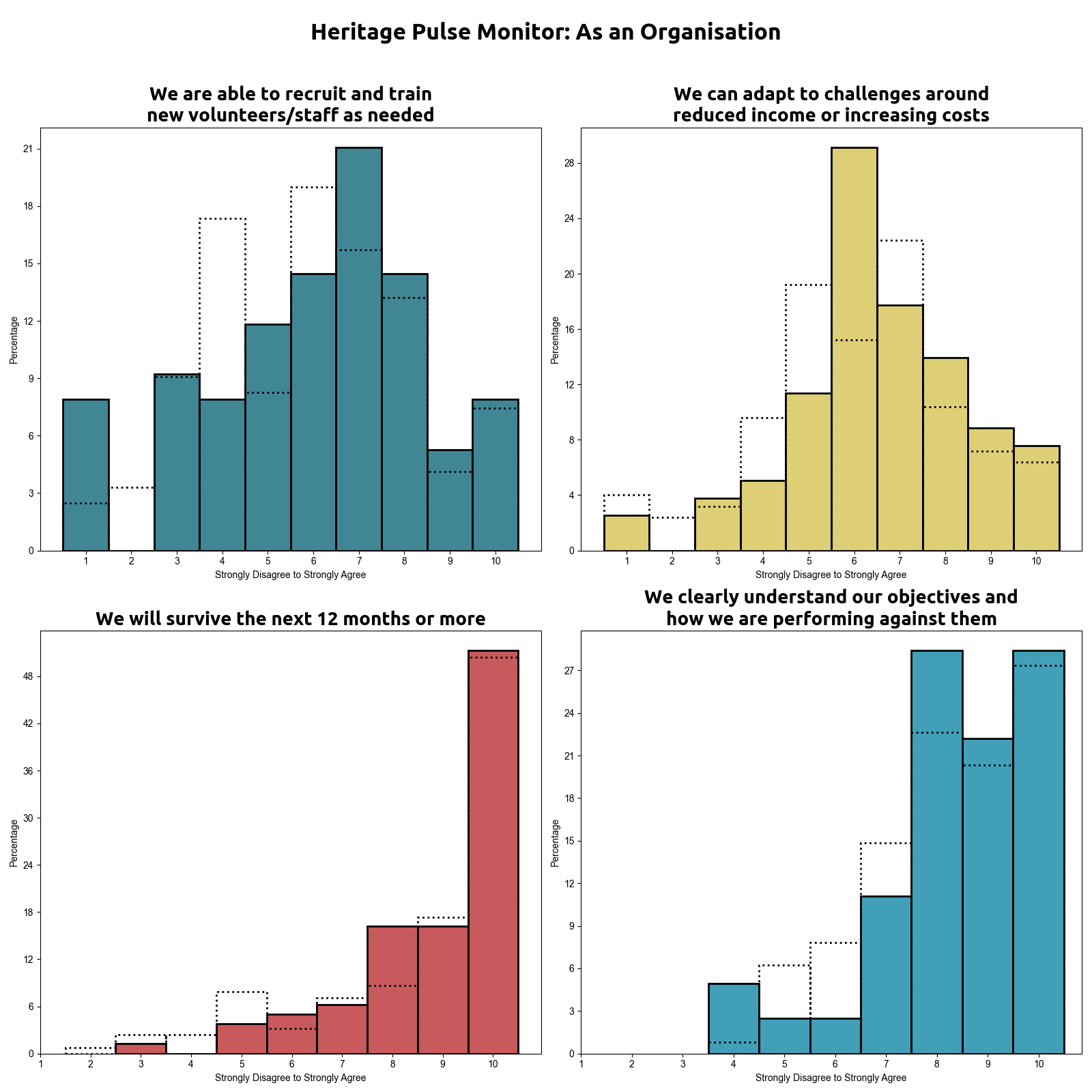
Solid bars: February 2026 response distribution / Dotted bars: January 2026 response distribution
As in January, “We clearly understand our objectives and how we are performing against them” has the narrowest range of responses this month, with respondents shifting from 5-7 /10 to 8-10 / 10.
Strong increases in perception of panel’s impact
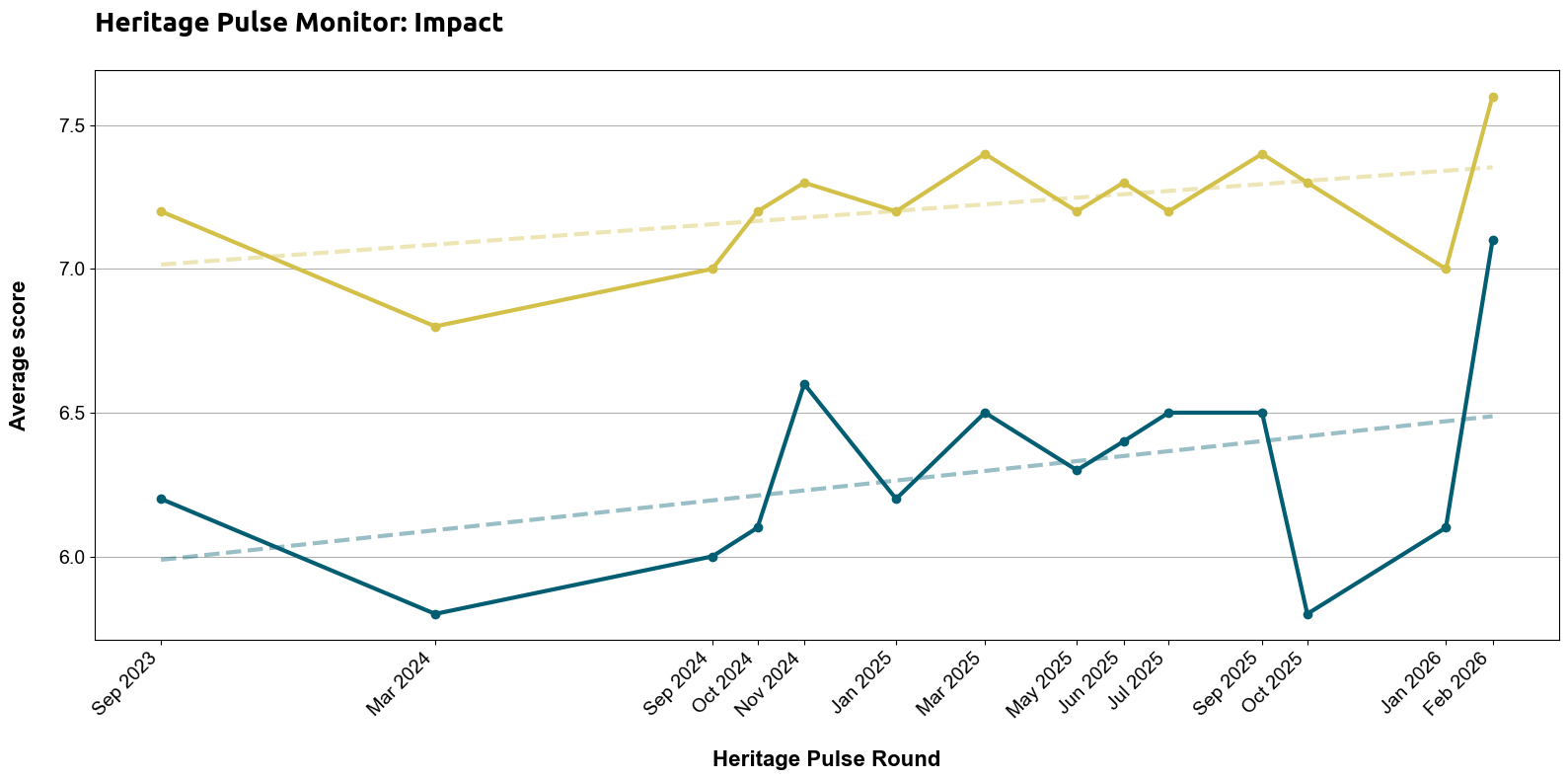
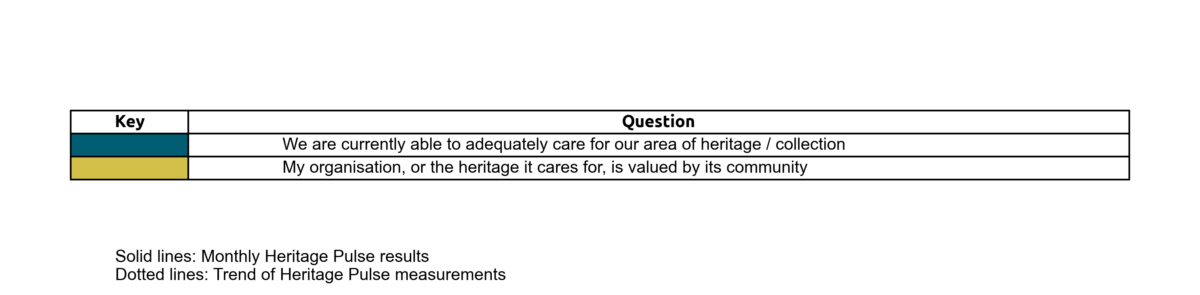
82 panel members completed this question.
Both impact measures recorded new high scores in Heritage Pulse this month. From January, there was a 16% increase (from 6.1 to 7.1 / 10) in the community’s value of heritage.
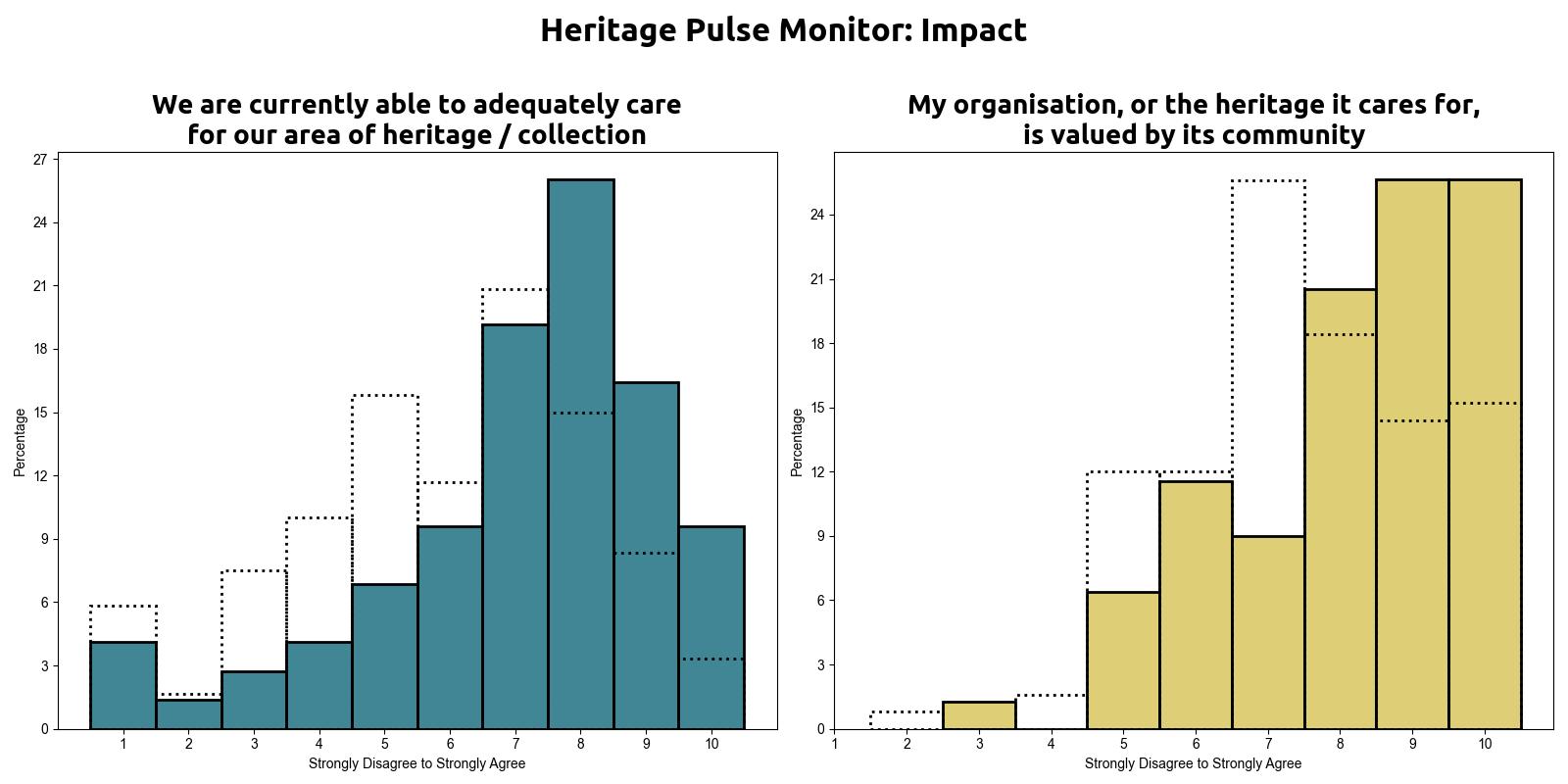
Solid bars: February 2026 response distribution / Dotted bars: January 2026 response distribution
This month, both impact measures saw an increase in respondents choosing the upper ends of the scale, driving their rise in February.
Personal impact of heritage work lessens this month

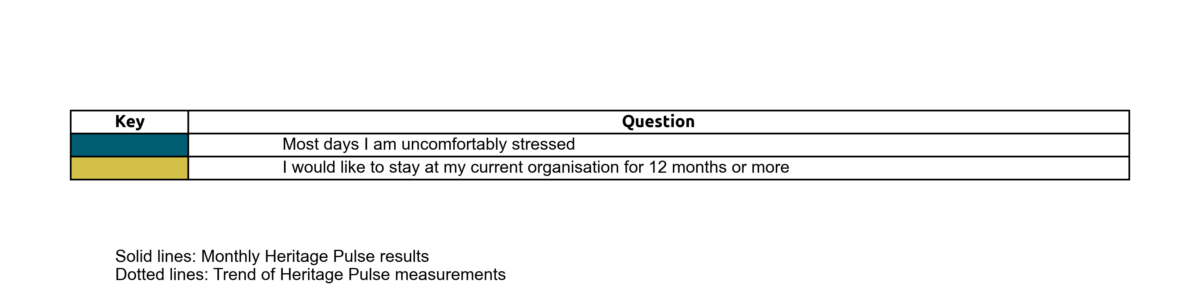
82 panel members completed this question
The reported stress of the panel decreased to 4.6 / 10, a half-point decrease to the same level as Autumn 2025. Their wish to stay at their current organisation remained at 7.3 / 10.
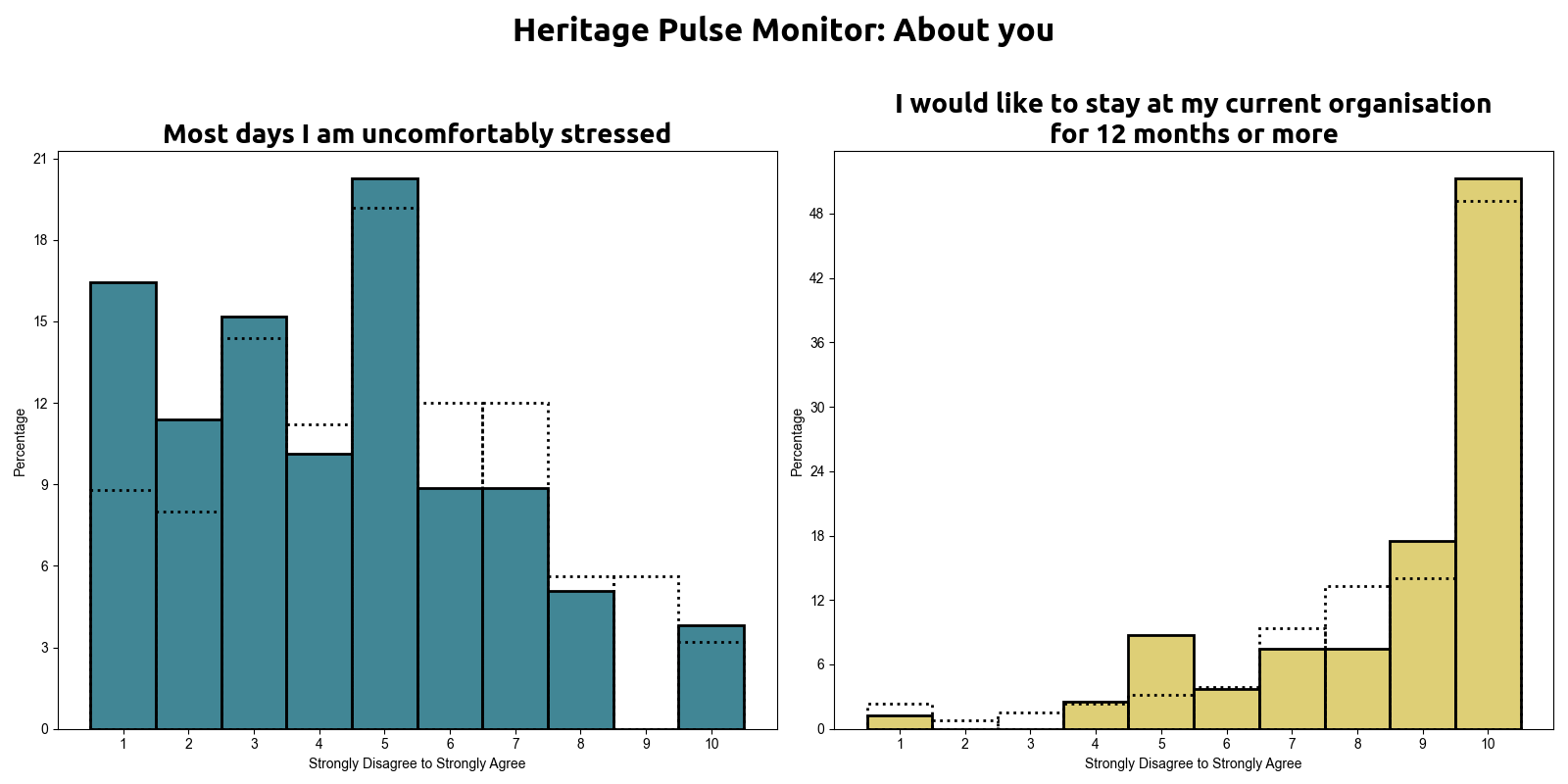
Solid bars: February 2026 response distribution / Dotted bars: January 2026 response distribution
“Most days I am uncomfortably stressed” had the widest distribution of responses in this survey, and its decline this month was driven by 1 / 10 increasing from 9% last month to 16.5% in February.
How representative of the Heritage Pulse panel were the February 2026 respondents?
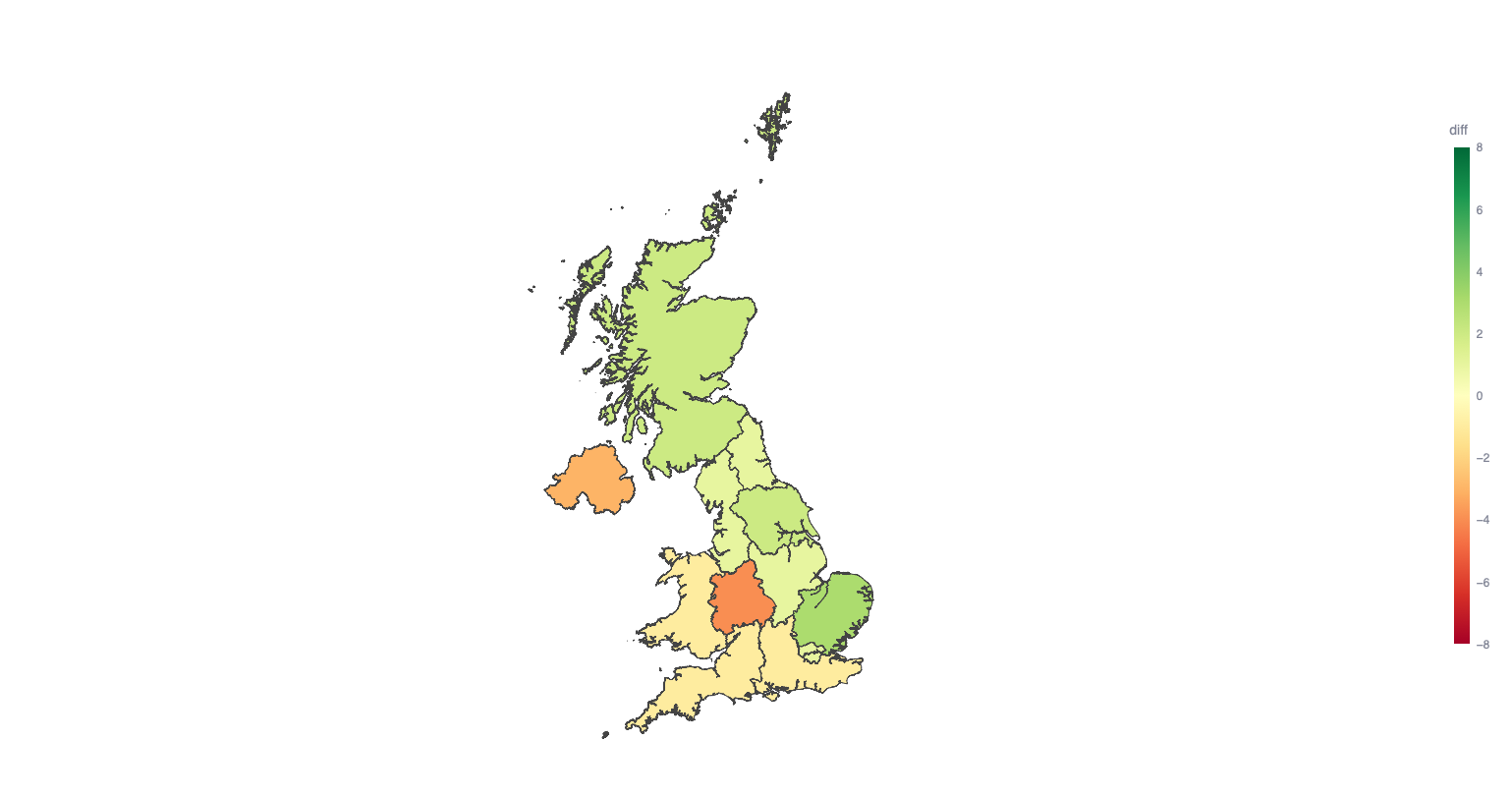
Compared to the whole panel, the West Midlands (-4 points) the most underrepresented region in this survey. By contrast, the East of England was the most overrepresented region, three points higher than its panel average.
ENDS