From getting the most out of your café to thinking through value from a variety of perspectives, this month UK Heritage Pulse has paired panel members’ advice on commercial successes with resources from around the heritage sector to help you make a change.
Our recent research, Heritage trading and the capacity to grow, reported that 64% of respondents expected to grow an existing commercial activity or start something new in the next 12 months. 63% said that trading produced a surplus which supported their wider work.
In our first What Works, we asked UK Heritage Pulse panel members to tell us about commercial activity that has worked for them, and what others should look out for. Responses ranged from a retired railway staff club in Neath to freelancers working in archaeology and other parts of the sector.
Consider what people value
Gerald Williams, a member of the Neath Great Western Railways Retired Staff Club, told us how the club has thought through what members value, what that costs to provide, and how to explain a price rise so that it lands with understanding and without complaint. The club meets at a pub on Wednesday afternoons, with 22 to 40 people in the room. It offers guest speakers, trips and a Christmas dinner. The subject, as Gerald puts it, is “mostly about railways!” The club’s commercial model is the weekly contribution, recently raised from £2.50 to £3, with a free raffle alongside it.
You can scale these choices – what’s on offer, to who, at what price, and how do you change either the price or the value – all the way from the GW Railways Retired Staff Club up to the British Museum’s blockbuster exhibitions – as a sector, we all face these decisions.
The café at the front door
As an interesting case study, Plunkett UK, a national charity supporting businesses in rural communities, highlighted the inspirational work of Cletwr, a community shop and café in Tre’r-ddôl, which has grown from being the local garage to a multi-faceted, vital resource – including offering volunteer and employment opportunities for young people in an area of high unemployment. Truly commerciality with a purpose.
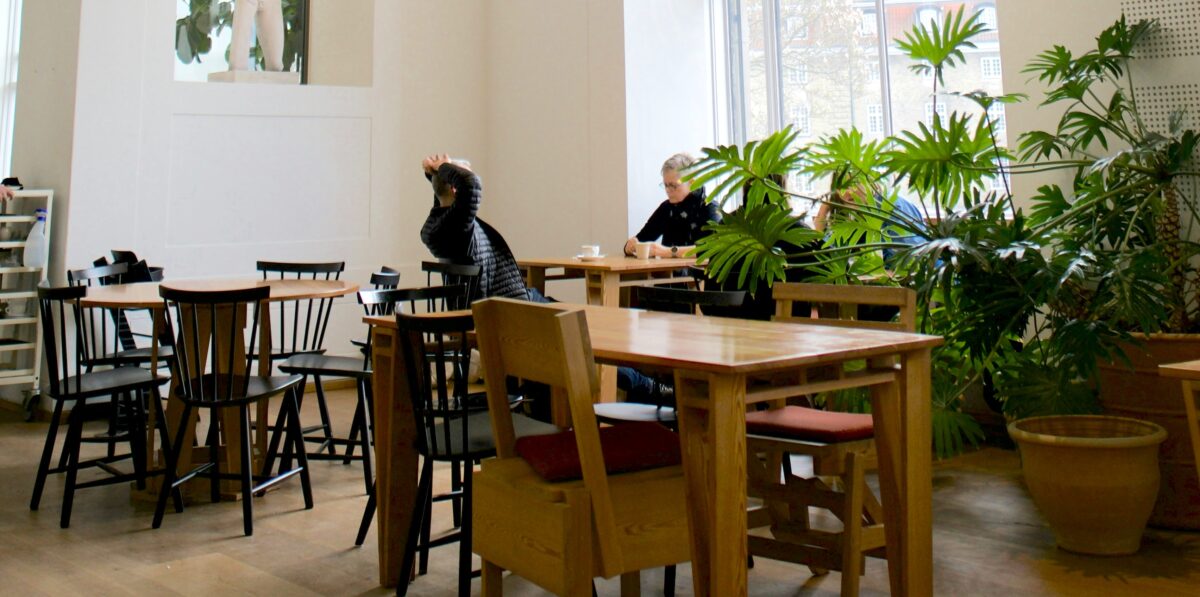
Sticking with cafés, the chief executive of a community organisation in east London told us about their in-house café, which has been merged with the broader front of house team and their operations. The café is the first thing people encounter on entering the building, and staff combine front-of-house and barista roles to save cost. He is frank that “it’s a challenge at times” – the main challenge arrives when somebody wants directions to a meeting room while three people are waiting for coffee!
Kiplin Hall in North Yorkshire went through a related exercise during a refurbishment, described in a case study for the Association of Independent Museums. Counter service reduces demands on staff time, and the shop shares space with admissions so one volunteer can handle both. The hall fundraised and drew down from its endowment to move the café outside the admission barrier, where it began attracting walkers and cyclists, greatly improving turnover.
Kiplin Hall’s attention to layout, staffing and visitor routes is a relatable example to follow, even if its endowment may leave you a little envious. AIM’s free Successful Museum Cafes guide and Museum Development South East’s Profitable Cafés in Museums recording (also on YouTube) cover objectives, operating models and cost control.
A good food and drink offer can also be a reason to visit in its own right. Baker Richards’ research into adults aged 35–54 without dependent children, commissioned by the Association of Leading Visitor Attractions, found a sizeable “Sociables” segment who are motivated by wanting to spend time in a buzzy, social atmosphere, with food and drink central to the experience. They are also the group most willing to pay a premium for it.
Tell people what you have
Robert Hill, director of the Historic Building Advisory Service, had a direct message for us: get what you do in front of the public, “not in a restrained and curated manner”, but in a way that catches the interest of people who would not normally think of visiting. His advice is to lose any stuffiness or elitism, to make the offer interesting and good value, and to advertise carefully and professionally. AIM’s Successful marketing for museums guide offers a framework and an action-plan template for small and medium-sized museums.
The Tank Museum in Dorset is an extraordinary outlier, but it shows what this can look like in practice. It reaches people who may never visit: its 2024 account of its digital strategy reported almost 30% of 2023 turnover coming online from non-visitors. Digital Culture Network’s case study (film on YouTube) explains how the approach widened access as well as income.
At any scale the starting question is the same: who could value your knowledge, stories or products, and how will they find out?
Scope and price
A freelance archaeologist responded to our call for insights with a counterpoint to Robert’s call for promotion. Their service is in demand because few people have the same qualifications, a position built on a substantial library and long experience in a chosen region. They spend nothing on advertising, refuse to misrepresent what they can do “simply to make money”, and will work unpaid to produce a report they are satisfied with.
Their warning is about scope and price. A recent failure to set out clearly what a contract included “cost me over £2,000”, and costing jobs is “a nightmare”: they find clients criticise quotes as too high or too low with equal readiness.
A sustainable fee has to cover the years of investment behind the expertise as well as the days spent on a commission, and the willingness to go further than the brief needs a boundary agreed in writing before the work starts. Here are three resources which can help:
- GEM’s Calculating Day Rates for Freelancers resource covers fair rates and hidden costs.
- Museum Development South East’s Working with Freelancers resources include guidance on contracts and work plans.
- CIfA’s standard and guidance on archaeological consultancy addresses scope, uncertainty, budgets and quality.
Income and purpose, together
Across the responses, income generation and a sense of purpose feed into one another. Income-generating activity helps to support conservation and community activity, and the commercial activity itself can also be how people encounter heritage. The Migration Museum’s Migrant Makers Market, described in its 2024 account of winning Best Shop at the Cultural Enterprises Awards, stocks products from migrant-led makers with their stories woven into the offer, so every purchase connects with the museum’s subject.
For charities in England and Wales, the Charity Commission’s trading guidance recognises that selling goods or services can itself directly further charitable aims, and Michael Stubbings of Turaco Consulting has published a helpful guide on ancillary trading, non-primary purpose trading and trading subsidiaries.
The same questions arise repeatedly. What benefit is the activity meant to deliver, what costs and resources does it need to cover in order to run, and what is left over once the costs are met?
For teams ready to test an idea, AIM’s Fragile to Flourishing resources include case studies, an enterprise business-case canvas and financial scenario tools, with a YouTube webinar introducing the toolkit.
We welcome more examples for What Works: small improvements, hard decisions, approaches that had to change and existing case studies. Your practical detail may be what helps another organisation decide where to concentrate their efforts.
What works for you? Do comment below to share your experiences.